Friendship Evangelism in the Workplace
By Glenn Deckert | This article narrates the journeys of three adults in diverse cultural settings that took them from unbelief to salvation. These were a Chinese medical doctor in America, a female poet in Hong Kong, and a traveling Iranian businessman. Two were confronted with the gospel in workplace settings, and the other mostly through online conversations. Through friendship, addressing personal needs, and Bible study each came to convincing saving faith. The author draws from decades of diary entries.

EMQ » Jan – April 2026 » Volume 62 Issue 1
Summary: This article narrates the journeys of three adults in diverse cultural settings that took them from unbelief to salvation. These were a Chinese medical doctor in America, a female poet in Hong Kong, and a traveling Iranian businessman. Two were confronted with the gospel in workplace settings, and the other mostly through online conversations. Through friendship, addressing personal needs, and Bible study each came to convincing saving faith. The author draws from decades of diary entries.
By Glenn Deckert
How God’s word engenders saving faith in people is a mystery. Our efforts to bring others to Christ often feature this mystery. Jesus’ parable of sowing the seed portrays the puzzle of just who will respond, who won’t, and when. We share the gospel not knowing who will come to faith on their first hearing or years later. In my sixty plus years as a lay witness and a long-term resident in several non-Western countries, I’ve seen my share of sown seed snatched by birds, sprouts soon wilted, and one-time seedlings choked by weeds. Yet the stories that follow show how three people of diverse upbringing each came to saving faith. Jesus’ parable about the sower gives a measure of hope to those who faithfully sow.
My purpose in writing is to share what I have seen God do in the lives of three mature adults whom I befriended over my long career as a university professor and later as an active retiree. I bear witness that each came to saving faith in Christ only gradually and they have remained Christians. There were others I might have chosen who had dramatic beginnings but faltered in following years. None of these seemed interested on their first or second hearing of the gospel. But, over time, each passed from darkness to light. These accounts are not based merely upon memory but upon decades of diary entries. The names of the three have been changed to protect their identity. My hope is that these stories bring encouragement to others who have similarly faithfully sown God’s word and wait for the harvest.
A Medical Doctor from China
In the fall of 1979, our family settled into an older home in Omaha, Nebraska two miles from the University of Nebraska/Omaha (UNO). I had been hired to be the Academic Coordinator of an intensive English language program for international students. At that time the first wave of university students from China were beginning to trickle into American universities. This followed President Nixon’s historic 1972 visit to China. One of my own students was Dr. Wu, a middle age medical doctor from China. He came to Nebraska to work on a project at Creighton Medical School but needed to upgrade his English in the UNO program.
I sometimes visited my students at their residence to see them outside a classroom setting. On one visit I realized how spartan Dr. Wu’s living was. Most of his meals, mostly rice, he cooked on a hot plate. That summer I invited him to our home for dinner. On entering our home, his eyes fastened upon our small stereo set. He brightened and asked if we had a recording of Jingle Bells. He must have been recalling Christmas music prior to the Cultural Revolution when foreign influences were banned. We then learned that Dr. Wu’s father had been a Christian pastor. He had suffered greatly upon the communist takeover under Mao Zedong in 1949. Dr. Wu had fond memories not only of Christmas music but the classical music that was banned by the regime.
Nearly a year later we again invited Dr. Wu for dinner. During our conversation, Dr. Wu admitted he had been brought up as a Christian but changed during his medical studies. He just couldn’t accept the miracles he read in the Bible. Earlier I had given him a copy of an article entitled “The Socialist’s Quest for the New Man” by Josif Ton. As a Baptist pastor Ton had lived for years in a Marxist society. The article focused on Marxists’ pursuit but failure to produce the “New Man.” Indoctrination did not produce selfless individuals dedicated to the dictates of the state. Marxist philosophy seemed to contradict the essence of human nature. That evening Dr. Wu told us he had read Ton’s article several times and concluded that both Marxism and religion had failed to perfect mankind. In response I read from the book of James, “Religion that God the Father accepts as pure and faultless is this: to look after orphans and widows in their distress and to keep oneself from being polluted by the world (1:27). Dr. Wu listened but did not comment.
At this time local theaters were showing “Chariots of Fire.” This portrayed the story of the Scottish runner Eric Liddell and his outstanding performance in the 1924 Paris Olympics. The film portrayed Liddell’s deep Christian convictions. Dr. Wu agreed to join me to see it, aware it had something to do with China. Later, as we discussed the life of Liddell and his later years as a missionary to China, he commented, “I see why you wanted me to see this film.”
Just two weeks after viewing the film he told me he was reading the New Testament. On Easter Sunday that year local Christians arranged an early morning outdoor sunrise Easter service for local international students. Dr. Wu was one who came and listened.
My most substantive discussion with Dr. Wu occurred on a Sunday evening visit. The word “gay” came up in respect to his planned stop in San Francisco on his return to China. He had learned the city was the “Gay Capital of the USA.” I responded with some Biblical teaching on the LGBTQ lifestyle but turned the discussion to other Christian teaching. I read the opening verses of Luke’s gospel explaining how Luke approached his writing. I also read from 1 Peter 2 on the conduct of God’s people, and referred to Pontius Pilate’s question, “What is truth?” But Dr. Wu only agreed to the importance of the behavioral effects of Christianity whether or not its claims were true.
Dr. Wu had now finished his research. I picked him up at his residence, drove to the Omaha airport, and helped him with his luggage as we said our final farewell. Two months later we received a letter from Dr. Wu. He wrote, “You and your family not only taugh (sic.) me English, but also gave me your friendship and warmth, which made me at home.”
Seven years later when, our family was based in Hong Kong. I wrote Dr. Wu raising the possibility of visiting him in China. He replied positively saying he was still teaching at the medical college. So, in April I found my way to his city where a volunteer offered to guide me to the physicians’ residence building. There I met Dr. Wu at the entrance. He welcomed me and led me up long flights of stairs to his small apartment. There I met his wife, also a physician. We began to chat in their sitting room. Suddenly, Dr. Wu sprang to his feet and took a small book from a shelf. It was a Gideon New Testament in Chinese that his father had given him just two years earlier. He held it up and declared, “Now I believe!” He added that he had gone to a church on the recent Easter Sunday. I asked him, “Are you now a Christian?” He smiled and replied, “I think.” I asked what had caused him to believe. He answered briefly, “I needed it.”
Later, having dinner together at a nearby restaurant, he shared more clearly that he was now a Christ follower, but secretly among his medical colleagues. We talked further, even about his eventual retirement. Before me now was a self-assured follower of Jesus Christ. After my leaving Hong Kong to resettle in the US, I felt writing him about spiritual things might hazard his wellbeing. He had given me no email address if he had had one. I could only pray that somehow Dr. Wu would become part of an active Christian fellowship.
Teacher and Poet in Hong Kong
In July 1985, I began working at one of the government-sponsored institutions of higher education. I headed a newly formed “Language Center” (LC) to design curriculum and hire instructors for English language instruction for all first-year students. The LC also offered elective courses in “Communication in Modern Chinese” and Mandarin, the main language of China. The LC Chinese courses were to be developed by a previously hired lecturer, Kai Ming.
Kai Ming, now in her early 30s, had come to Hong Kong with her parents as a child from Guangzhou, China. Here she earned BA and MA degrees from the prestigious Hong Kong University. She was married to an engineer and had three small children. Kai Ming had become one of HK’s few known female poets and also a writer of short stories for children. She had won competitive awards in both poetry and prose. In one of our early conversations, she mentioned some of her friends had become Christians, but she was “not ready for that kind of commitment.” Many months slipped by as we each were preoccupied with designing courses we would soon be teaching and overseeing.
Two years later spiritual things came up in conversation, and I got a sense she was now considering the Christian claims. She had attended a Christian cell group but was disappointed that discussion often veered away from the Bible. Some members seemed annoyed at her many questions. I suggested we meet together to discuss how Christ enters and changes a person’s life. In that meeting, she asked many questions: Did God the Father suffer when Jesus died? What age will we be when we are resurrected? Did I know anyone who had been converted from atheism?
Nearly another year passed with little further conversation on spiritual matters. Later, I came across an article she had written for one of Hong Kong’s newspapers. It focused on the search for a faith to live by.
About this time, I learned she had begun seriously reading the gospels. She phoned me one day asking if I would help her understand her reading. I agreed, we had lunch together and then went to my office and began reading Mark’s gospel. We simply read the text aloud and either of us raised questions or stated observations. For months we read together once a week. During these readings she once remarked that she hoped Jesus could change her life because there was much in it she didn’t like. In another meeting I was struck by her disparaging reference to “the old Kai Ming.” One day she shared with delight that her husband Chang was avidly reading the New Testament.
Some of our meetings now lasted up to an hour and a half. When we read of Jesus casting out demons, she wanted to know what to do with a gold piece once offered to idols, and with an album portraying demons. In one meeting she spoke of her uneasy conscience for taking college ballpoint pens and stationery for personal use. Another time she shared that when she had trouble getting to sleep, she was able to drift off to sleep by praying rather than by taking pills. Yet, she still could not say she was a Christian. She said she “felt unworthy of such a gift.”
In May 1989, thousands of university students were staging protests in the heart of Beijing demanding freedom of speech and an end to corruption. Authorities responded forcefully sending in armed soldiers backed by tanks. People across Hong Kong became glued to their TV sets viewing with horror. On May 23 Kai Ming phoned me, “Glenn, we must call for a prayer meeting!” Surprised at her initiative, I concurred and offered my office as a venue. At the set time Kai Ming entered my office leading five other Chinese faculty members whom she had invited. Not all were Christians or comfortable in spoken English. We got seated, and I wondered just how to begin—but Kai Ming took the lead. She began, “I’m new on the Christian team, and we must pray about the conflict in Beijing.” She began to weep and, between sobs, pray aloud. I and others followed in English or Cantonese. I lost track of the time. Most strikingly, Kai Ming had boldly announced she now counted herself among the Christians on the college campus. In June 1990, my wife and I had the joy of seeing Kai Ming baptized. Five months later, her husband followed her in submitting his life to Jesus.
The “new Kai Ming”—her expression—found it natural to explain the gospel to others. Aside from her husband’s coming to faith, I learned about the many students and acquaintances she had impacted with the gospel. When we left Hong Kong, it was with mixed feelings that we accepted her offer to drive our family, with six bulging suitcases, to Hong Kong’s old Kai Tak Airport.
A few years after that goodbye, I received a one-page Chinese poem she had written and dedicated “To Glenn who led me to Christ.” Ten years after that on a stop at Hong Kong on my way to the Philippines, Kai Ming met and took me to her apartment, high up in one of the 99 towers of one of Hong Kong’s largest estates, home to over 50,000 people. Kai Ming continues to serve her Lord and Savior, Jesus Christ, in many ways.
A Businessman in Iran
As a speaker of Farsi, I was invited to help some Christian workers in Turkey in outreach to Iranian refugees. I agreed and made my first of ten annual trips to Turkey, each about a month long. The story that follows began on my second trip in the spring of 2013.
I was staying at a low-cost Istanbul hotel. One morning in the lobby I overheard some Iranian men chatting in Farsi. I stopped and commented how I delighted to hear that language. We shared pleasantries and I headed for the exit. Then I realized one of the men was following me. Once outside I turned and faced Mohsen who asked me if I was a Christian and able to give him some understanding of the Christian faith. We agreed to talk that evening in his hotel room.
That evening, during an hour and a half’s conversation, I learned who he was. He appeared to be in his late 40s. He had a wife and two children. They lived in a suburb of a major city. He was in Turkey on business for a few days. I turned our discussion to the issue he first posed, the essence of the Christian faith. He knew of Jesus only as a prophet. So, I read and explained John 3:16-17 and the opening verses of Luke’s gospel from a Farsi New Testament. Then, I vividly recall him handing me his phone to talk with his Iranian friend in Sweden who had converted to the Christian faith. I gave Mohsen a small Farsi New Testament and prayed for him. We exchanged contact information and agreed to meet the next evening, his last day before heading back to Iran.
Next day near 10 p.m. we met in my hotel room. Mohsen told me about his little daughter who had a chromosome disorder. Getting the needed medication in Iran was difficult. Then I turned to Scripture and read the opening verses of Ephesians 2 and the invitation of Revelation 3:20. That evening was the last time we saw each other in-person. Mohsen flew back to Iran the next morning. Communication thereafter was hampered by poor internet connections, Mohsen’s irregular work schedule, and calls to him at inconvenient times. Additionally, we were inhibited by the prospect of security agents monitoring all communications.
My first electronic messaging to Mohsen was two months later to share what I had learned about his daughter’s condition and its treatment in the US. Then, in October, he phoned asking how to follow Jesus and experience his help. In response, we had two conversations by Skype. I found this encouraging and aimed to keep in contact with him. In late 2013 we began frequent online Bible readings in Farsi on New Testament passages.
As we read through the gospel of Matthew, I sent him sets of questions in Farsi to help him read Scripture with an active mind. For example, on Matthew 11, “What does Jesus say about his relationship to the Father?” On Matthew 12, “How did Jesus’ teaching differ from the teaching of the Pharisees?” And for Matthew 13, “From all the parables in this chapter, what do we learn about the Kingdom of God?” In January 2014 alone we had six sessions, some lasting nearly an hour. We moved on to Romans and reached chapter 10, verse 9: “. . . if you confess with your mouth that Jesus is Lord. . .” When I asked if he could repeat those words, he replied, “Oh, . . . that is so very hard for a Muslim to say.” But in a following session, he volunteered that he had come to the conviction that “Jesus is Lord.” A cloud of doubt had passed.
Then the sobering fact of opposition and hardship came in November 2014. Mohsen phoned to say he was facing many problems “due to religion.” Thankfully, his wife appeared to have followed him in faith, but he had lost his job, been ostracized by his wife’s family over their faith, and the construction of a large building for small shops he had invested in had come to a standstill. Further, he had gone to court over a dispute with this business partner. Mohsen had concluded that he could sell his car, cross over the open border into Turkey, and declare refugee status as many others had done. This was not my wish for him, but I felt I should support him in his decision.
I had to tell him how hard life was for refugees in Turkey. They are confined to a specific city and not allowed to work legally. Unscrupulous employers hire refugees for low-paying menial work. He would need money for rent, for a lawyer, and for the support of his family. Iranian refugees often spend four, five or more years before finding passage to the West. But I assured him he could find Farsi language churches in many of the Turkish cities he might be assigned to, something entirely new to him. With this in mind, he proceeded to check it out firsthand. He made a solo trip to Turkey in early 2015. After several weeks he returned having concluded he could better deal with the hardships under the Islamic Republic than live as a refugee in Turkey.
Mohsen’s messages during 2016 were encouraging. He installed a satellite dish to receive broadcasts of sound biblical teaching. Another time he Skyped to say he was reading passages from Matthew with some of his neighbors. Then a puzzling four-month communication gap occurred. Later he explained he had been at his mother’s home to care for her after surgery, without any internet connection.
However, Mohsen’s zeal had not gone unnoticed by a network of security agents. He phoned me to report he had been summoned by the police and interrogated for three hours about his religious activities. Unfortunately, his brother then learned of this development and became furiously angry with him. About that time a few house churches in his suburb were discovered and broken up by government agents.
After a couple of short sessions on 1 Peter, my calls to him went unanswered. From mid-2019 through spring 2023 there were four periods of silence ranging from seven to nine months. In the spring of 2023, I sent a WhatsApp text asking his approval for my sending short portions of Scripture in Farsi, often from the Old Testament, every few weeks without personal comments. He agreed. I began with verses from Isaiah 53 and next from Psalm 46. This continued for months. He usually responded the same day with praying hands, images of flowers and video clips of Iranian tourist sites. My prayer is that the day will come when Mohsen and family may worship openly with others, have water baptism publicly, and practice the Lord’s Supper with others of like faith.
Some Takeaways
- A Christian may catch signals that a certain person is open to learning Christian truth. I recall Kai Ming’s offhanded remark that friends of hers had become Christians. Mohsen in the hotel lobby clearly showed his readiness to learn.
- Those we find open to the gospel often have had a prior encounter with it. This was evident in all three cases, Dr. Wu with his father, and both Kai Ming and Mohsen with friends who had earlier embraced Christ.
- Perseverance must be paired with patience. Favorable opportunities for sharing biblical truth may be frequent or spread far apart over time. With all three of these people there were long gaps between meaningful discussions.
- National upheaval, chaotic social conditions, or personal hardship may impact a person toward embracing Christ. The two Chinese in this report both came to saving faith near the upsetting events of the Tiananmen Square massacre.
- Under the Holy Spirit’s guidance, a long-term friendship and witness to an unbeliever is worth pursuing. That was certainly true with these three individuals.
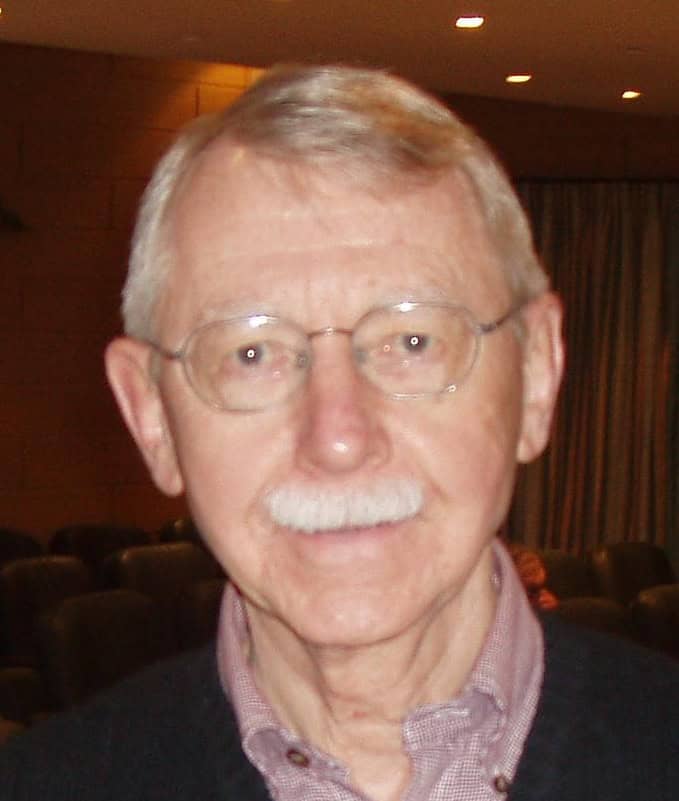
Glenn Deckert earned a PhD at the University of Illinois following seminary and ministry with IVCF. This led to 20 years of university teaching in Nebraska, Iran, Saudi Arabia, and Hong Kong, as well as State Department appointments to Moldova, Qatar, and Azerbaijan. His final years of teaching were at Eastern Michigan University. In retirement, he volunteered on ten occasions to assist Iranian refugees in Turkey. Glenn is the author of Working Abroad With Purpose: The Way of a Tentmaker (Wipf & Stock, 2019).
EMQ, Volume 62, Issue 1. Copyright © 2026 by Missio Nexus. All rights reserved. Not to be reproduced or copied in any form without written permission from Missio Nexus. Email: [email protected].
 EMQ ArticleFive Questions about Disciples and Disciple MakingJuly 15, 2026
 EMQ ArticleReframing Cross-Cultural Discipleship around Allegiance: Promoting Peace, Reconciliation, and Freedom from FearJuly 15, 2026
 EMQ ArticleBeing Among the Lost: Discipleship Must Move Back into the World of the UnreachedJuly 15, 2026