Nomads and Church: Beyond Our Walls
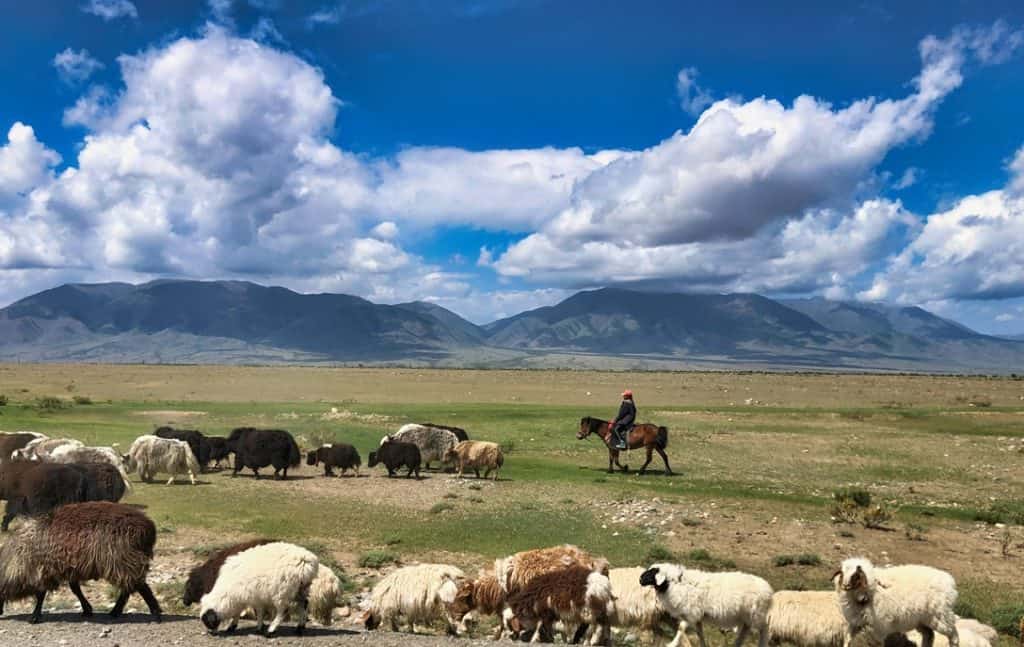
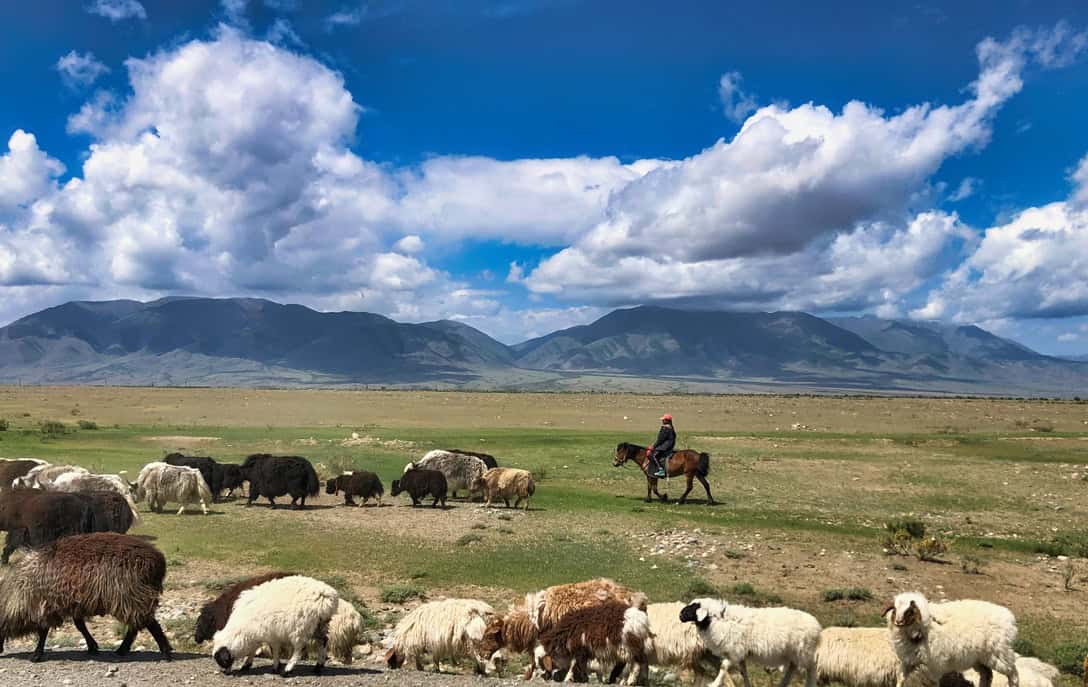
By William J. Stephens | Mongolian nomads, moving from one encampment to another through vast terrains, pose a challenge for church planting. Instead of imposing models of church, let’s learn how Christian nomads themselves experience church. For them, churches are like family reunions, irregular yet incredibly special. Relationships and hospitality are vital. From Stephens’ reflection on his experience, we learn how to do and receive hospitality, and be sensitive to the culture, needs, and expectations of those we engage with.
EMQ » Jan – April 2026 » Volume 62 Issue 1
Summary: Mongolian nomads, moving from one encampment to another through vast terrains, pose a challenge for church planting. Instead of imposing models of church, let’s learn how Christian nomads themselves experience church. For them, churches are like family reunions, irregular yet incredibly special. Relationships and hospitality are vital. From Stephens’ reflection on his experience, we learn how to do and receive hospitality, and be sensitive to the culture, needs, and expectations of those we engage with.
By William J. Stephens
We can learn many things relevant for reaching immigrant people from Mongolian nomadic herders. Although their manner of life is quite different from settled people, some observations are transferrable to other contexts. We need to be sensitive to people’s unique life situations. People may gather in different churches or Christian gatherings based on their needs. Relationships are key, and hospitality builds and strengthens relationships. Spiritual nourishment is often welcome. As we encounter people from diverse cultures, we grow in our understanding. And as we grow, we realize that Christ’s body is bigger than our own church.
In 2021–2022, I travelled across Mongolia conducting interviews with nomads.[i] The interviewees were Christian, a tiny religious minority amongst Buddhists and Shamanists. Through these interviews, I learnt that Mongolian Christian nomadic herders, having their own living biblical faith, engage in church and other Christian gatherings in various places based on migration patterns, family circumstances and needs, in-person and online. For them, church participation is akin to occasional family and friend reunions. These nomads are dedicated to protecting and sustaining their livestock, with which they live in inter-dependence. They respect church leadership, especially ordained pastors. Practicing good hospitality is a way of life, while they face the distance from and dispersion of other Christians.[ii]
Polycentric Christian Gatherings as Family Reunions
The Mongolian nomad Christian experience is not focused on attending a single church building, a single center. Instead, they meet with different congregations of townspeople wherever they travel. They join whichever Christians are meeting in those places, often influenced by connections with friends or relatives. Typically, these meetings are in church buildings. Some, however, may meet in different configurations in yurts (portable round Central Asian tents), out in the pasturelands. One Gobi Desert nomad spoke of the church meeting in her ger (Mongolian yurt) while an Altai Mountains nomad described meeting in the gers of different families. A meeting in a town building or in a ger encampment both mean church for Christian nomads. Church, for them, is a polycentric experience.
These Christians, whose lives depend on caring for their free-ranging livestock, move from pasture to pasture, place to place. Even when they stay in one place for a season, they often make long trips. They travel to county towns, provincial towns, or the national capital, Ulaanbaatar. They do this to buy groceries and supplies, receive medical care, take their children to school dormitories, or visit relatives. Going to church in a building may be combined with these infrequent trips. For one interviewee, riding his horse to attend church in town was the primary purpose of his travel.
Christian nomads have more than one connection with churches and Christian gatherings, whether in-person or online. This is due to their nomadic life. They are often isolated from any other believers. Some nomads are the only Christians in their families. Opportunities for contact with other believers are rare. A Christian nomad participating in church is not regular. But when it does occur, it is incredibly special, like a family reunion. One nomad enjoys these gatherings of “brothers and sisters of great faith. … more than a friend.”[iii]
Here are some examples of how nomadic Mongolian believers experience church.[iv] Uuganbayar goes to church in a building once a year at the most, when he goes far away to Ulaanbaatar. Yet, weekly, he joins a small online group of Ulaanbaatar people on his smart phone. This group is led by his younger sister. In Ulaanbaatar, she goes to a church different from his church. These churches meet in different buildings. In the online group, they study the Bible and pray together. Uuganbayar also watches sermons on YouTube from different pastors.
Oyunchimeg, a nomadic herdswoman, leads a church among nomads. They meet in gers of different nomadic families every few weeks. She describes her church as being independent. Yet, she is mentored by a church elder in the provincial capital. Moreover, she was appointed as a nomadic church leader by a pastor from another church in that same town.
Byambasuren sees the small church in the nearby village as being linked not only to the church in the county center, but also to a church in Ulaanbaatar which sporadically sends ministry teams there. This capital city church is unrelated to the county center church.
Davaa has attended church only a handful of times in her few years of being a Christian, the church meets in a building hours away in the county center, over difficult, dirt, mountainous roads. She was baptized at an inter-church camp held in the provincial capital, a long day’s drive away. The churches who conducted the camp have different denominational affiliations and origins. Davaa wishes to begin a church among nomads in the mountains.
In today’s world, this pattern of engaging with multiple churches is not unique to nomads. Across the globe in Colorado, a Nepali Christian family attends an American church. Yet sometimes they join their church in Kathmandu online. They regularly send offerings to this Nepali church for its vital orphanage ministry.
For those whose only experience of church is physically attending meetings in a single building, these examples might sound like church chaos. Yet, according to Craig Van Gelder: “the church, while existing as one, also must exist as many diverse expressions” even if it does not have “organizational or institutional oneness.”[v] The body of our Lord Jesus Christ is bigger than any one church. Jesus’ prayer in John 17 was for all his disciples to be one. Therefore, just as with the inter-church camp Davaa attended, churches need to relate to one another. Similarly, individual Christians may attend different churches or gatherings based on their circumstances.
For those working with diaspora communities, it is helpful to let go of our idea of attending church as being only associated with a single building. From these Mongolian nomads, we can learn to value engaging with our spiritual relatives wherever they are. Spiritual growth and worship can occur in varied places and even in different denominations. Meeting with one another, wherever we come from, should reflect the welcome of visitors to a nomadic tent. Welcoming is fostered by hospitality and building relationships.
Focus on Hospitality and Relationships
Mongolian nomads are very hospitable people and enjoy receiving guests, serving tea and meals even to strangers. A Mongolian proverb says, “Tsai ch ugui/ Tsarai ch ugui,”[vi] literally “Not even tea/ not even face.” This means that to not serve tea to a guest (which is the most basic step in Mongolian hospitality) is unthinkably rude, as if you are not honoring your guest, or conveying that you yourself do not matter. Baatar, a Gobi herdsman, likes traveling to church. He says, “People come to church for fellowship and then during fellowship gathering we eat and drink, food and drink.”[vii] It is noteworthy that Baatar describes having a meal as being part of the fellowship time, not just a supplemental time after church. As a parallel, in my experience, Chinese churches in America serve hearty meals after the worship service, where the fellowship continues. Thus, for nomads, the fellowship created by hospitality and sharing tea and a meal is an important part of the church experience.
Nomads can seldom attend a church meeting in a town. They must constantly protect their open range livestock from predators, thieves, or having them accidentally join another nomad’s herds. Therefore, going to church is special, like a family reunion. Just as family reunions are infrequent, much loved, and graced with hospitality, spiritual family reunions—gathering as a church is special and much loved. And just as family reunions may be hosted in different homes on separate occasions, the spiritual family of the church may meet in different locales.
For the very few nomadic herders who have church meetings out where they camp, the churches gather irregularly, after weeks or months apart. Out on the vast steppes and in remote mountain valleys, Christians are nearly always isolated from other believers. They constantly move due to the ever-pressing need for good pasture. Staying in one place too long damages the grassland. This causes desertification which adversely affects the nomadic way of life, which depends on sustainable grazing land and healthy livestock. Therefore, nomads are often far from others, and welcoming any guest who comes from afar is an important aspect of their culture. In this culture, visits are highly valued. Visitors may be traveling family or friends, people who can find their nomadic encampments, since these encampments do not have any address.
Be Good Visitors
Far from any town, Byamba warmly welcomes visits from two pastors from two different churches in the provincial capital. His wife, Tsegii, serves these guests yak milk tea and hot meals. Yet, he is disappointed that they only come out to his ger in the beautiful countryside to rest, not to teach him and his wife any Bible. In my experience, Christian nomads welcome a message from the Bible, and even unbelieving nomads find Bible stories interesting, and Bible proverbs wise. Offers of prayer are also welcomed, even by unbelievers.
While welcoming ad hoc visits from Christian spiritual brothers and sisters, Christian nomadic herders also appreciate planned visits from small teams of Mongolians sent out from town churches. One herdswoman even mentioned American Christian guests. The mission team was multi-ethnic, and she reflected, “Yellow, white, black – we are all God’s family.”[viii]
Tuya, a nomad from the eastern mountains of Mongolia, described positive and negative experiences of visiting Christian workers. She spoke highly of a city man who came and lived among them, teaching the Bible to nomads. He also helped watching livestock and doing chores such as chopping firewood. When he returned to his city, his organization decided upon a new focus, stopping nomadic work. Sadly, this meant he and others did not return. She lamented that she and other “herders were people, and not projects.” She added, “it is much better to go and build a foundation on friendship, for the others’ lives.”[ix] She then described other short-term teams as not listening, not understanding their way of life, and being too quick to tell them what to do. She complained about visitors being more interested in taking selfies than in understanding them.
Whether visiting nomads in their tents or new migrants in their city homes, ministry starts with relationships. These are built through careful listening and active loving. Just like the nomads welcoming people in their gers, let us warmly welcome different people into our lives and homes, and embrace their welcoming us into theirs. To do this, we need to learn to be comfortable in diverse cultural settings.
Be Sensitive to People’s Culture, Needs, and Expectations
People may assume that nomads are free spirits, roaming when they feel like it. In fact, Mongolian nomads migrate according to seasonal patterns for grazing and land preservation. They have many religious, cultural, and practical traditions. Many consult Buddhist astrological calendars to determine the exact day to pack up the ger and move. Even in their gers, which areround without walls inside, there are traditional places for male and female, and for the head of the family. As guests, there are also set places to sit, based on age or status. When serving a meal or tea, the wife serves her husband first, to show him honor, before serving others. As visitors in cross-cultural situations, we learn these things by observing, listening, and, when appropriate, by asking questions.
As a Westerner I had assumed that nomads would welcome informality, a come as you are, as it suits you approach to church planting. Yet, a profound experience unsettled my thinking. Years ago, some Mongolian Christians and I traveled far and led a nomad family to Christ in the Gobi Desert. This was in a county without any church. We taught them that they could have church where they were. We explained Bible reading, prayer, and worship, teaching them a simple song. But they insisted on knowing where the nearest “Jesus’ Temple” was so they could go there.[x] We encouraged a house church model similar to the New Testament pattern. However, the nomad family rejected this. Upon reflection, their view was not too surprising since most Mongolians travel to a Buddhist temple or ovoo (sacred cairn) to worship. For this family, the nearest church building was in the provincial capital. Later, the father of the family traveled there to worship in that church. Most of the nomads I interviewed believed that church was a place to travel to, instead of potentially being where they were staying out on the steppes.
An elderly herdswoman, a former Buddhist, had only been to a church building once, for it was far from her. She marveled at the building and all the people there: “I thought I was in God’s palace.”[xi] Her thinking resonates with religious historian, Mircea Eliade’s: “For religious man, space is not homogenous; he experiences interruptions, breaks in it; some parts of space are qualitatively different from others.”[xii]
Thus, people may expect more than our informal Bible studies, expecting more formality or ritual, in dedicated Christian buildings. For those of us from plain, Protestant backgrounds, it may be helpful to consider what extra value formal church services and buildings can offer to people from cultures who appreciate ritual and religious space. This needs careful prayer and reflection. It may also require negotiation with other Christians who use these places of worship.
Sometimes, Christian leaders try to control when and where followers meet. Nomad Uuganbayar joins online with others far away in a small group, but only goes to church in a building about once a year. This is in the national capital. He wants to go to a nearer church. It meets in a small town less than an hour’s motorcycle ride from any of his ger encampments. Yet his pastor in the capital will not let him, saying he belongs to his flock.
Generally, Mongolian Christians, and many Majority World people, respect their pastors more than Western people do. Yet, nomads and migrants still make choices regarding fellowship, based on life circumstances, relationships, and other concerns. Sometimes we are tempted to control what people we are discipling do. We may act as if those people are ours. However, all Christians belong to the Chief Shepherd (1 Peter 5:4). It may be helpful to reflect on the following questions: What if a Nepali pastor did not give permission for a Nepali family in America to attend any church in the US? What if an American pastor told a Nepali family not to join their church back home online? How might these restrictions affect the family’s growth in Christ?
Like for the Mongolian nomads, church in today’s world, especially for immigrant peoples, can be a polycentric experience. While we may view the fellowship we regularly attend as our spiritual family, surely it is healthy for people to also visit with their extended family, wherever they are found. The body of our Lord is in and beyond the walls of a single church building. As we visit with people from other cultures, and are welcomed into their spaces, we need to keep the focus on relationships. We can strengthen those relationships by being sensitive to the culture of the people we are visiting.
[i] Stephens, William J. Sheep on an Open Range: Mongolian Christian Nomads and Their Views and Experiences of Church (2024). Available on Lulu.com
[ii] Stephens 2024, p. 83.
[iii] Stephens 2024, p. 127.
[iv] All names have been changed to protect the identity of the interviewees.
[v] Van Gelder, Craig. The Essence of Church: Community Created by the Spirit. (Baker Books, 2000), 121.
[vi] Stephens, William J., “Lactile Libations: Mongolian Milk Offerings,” Missiology: An International Review 49, no. 1 (2021): 39-53. https://doi.org/10.1177/0091829620914267
[vii] Stephens 2024, p. 137.
[viii] Stephens 2024, p. 121.
[ix] Stephens 2024, p. 123.
[x] Stephens, 2024, pp. 2-5.
[xi] Stephens, 2024, pp. 100-101.
[xii] Eliade, Mircea. The Sacred and the Profane: The Nature of Religion. (Harcourt, 1987), 20.
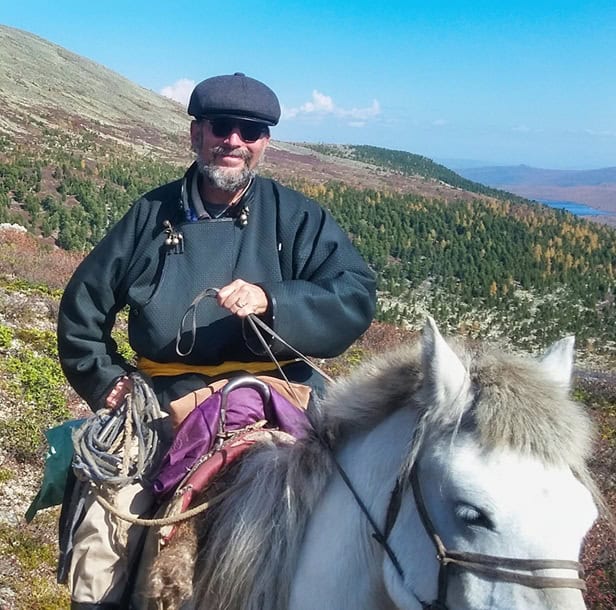
William J. Stephens has served in Mongolia with his wife Kwai Lin for over thirty years. He has taught English, Mongolian History, Bible, and mission-related courses. They have taught, mentored, and advised Christian leaders formally and informally, and have also worked with Mongolians in establishing churches and going out in mission. After reaching nomads for two decades, he did doctoral research on nomads and church. Currently he works in a Mongolian missional business.
EMQ, Volume 62, Issue 1. Copyright © 2026 by Missio Nexus. All rights reserved. Not to be reproduced or copied in any form without written permission from Missio Nexus. Email: [email protected].
 EMQ ArticleReframing Cross-Cultural Discipleship around Allegiance: Promoting Peace, Reconciliation, and Freedom from FearJuly 15, 2026
 EMQ ArticleBeing Among the Lost: Discipleship Must Move Back into the World of the UnreachedJuly 15, 2026
 EMQ ArticleDiscipling Leaders Across Cultures: A Four-Dimension Framework and How to Apply ItJuly 15, 2026