Member-Care During Cultural Adjustment
By Bruce T. Sidebotham | This article helps member-care personnel facilitate personal resiliency, team effectiveness, and good ministry results by assessing culture-stress conditions and coaching workers through the stages of adjustment.

EMQ » Jan – April 2026 » Volume 62 Issue 1

Summary: This article helps member-care personnel facilitate personal resiliency, team effectiveness, and good ministry results by assessing culture-stress conditions and coaching workers through the stages of adjustment. It identifies potential adjustment challenges to emotional health, relationships, and ministry effectiveness at different degrees of cross-cultural exposure. It describes stages of cultural adjustment along with their associated emotions, behaviors, and attitudes.
By Bruce T. Sidebotham
As a reserve Army chaplain and former missionary among Muslims, I spent a year in Iraq providing pastoral care to over 650 embedded military advisors on 54 teams in dispersed locations. My main effort was helping people find and follow Jesus. I also wanted team members who were following Jesus to have a good cross-cultural testimony among Muslims. That meant a supporting effort had to be facilitating emotional resilience, healthy team dynamics, and successful influence on local institutions. What follows are observations from personal experience that may apply to missionaries in disaster response, community development, evangelism, and church planting.
Discovering Levels of Exposure
An early observation was how degrees of cross-cultural exposure varied. I discovered emotional and relational stress increasing as exposure to cultural differences increased. I found exposure degrees varied from simply being present in the context, through working alongside in partnership, to being fully immersed like a local person.
I found personnel living on a base who worked mostly with other military and contractors experiencing a presence degree of exposure. In that case, awareness of cultural difference was often sufficient for healthy coping. I found stress increasing when personnel worked together with local people on projects. Developing empathetic cultural understanding seemed to alleviate stress for those in partnership. Culture stress was highest when personnel lived among locals and were trying to influence local institutions. I found that resilience and healthy relationships in those immersive situations required thorough cross-cultural adjustment.
Discovering Potential Adjustment Hurdles
From my study at Columbia International University, I remembered that missiologist Dr. David Hesselgrave had identified six behavioral categories of a worldview.[i] I organized these to create an acrostic – TACPID – representing thinking, acting, communicating, perceiving, interacting, and deciding. This helped me illuminate particular areas of adjustment challenge.
Worldview encompasses ways of thinking. For example, American society tends to prioritize an individual’s personal agency. In contrast, Chinese society prioritizes harmony. In Cultural Intelligence, David Livermore notes that individualism and collectivism are at “opposite ends of the identity spectrum.”[ii] Anthropologist Paul Hiebert underscores this.
One of the most fundamental themes in the world view of the United States is that the individual is the basic building block of society…. In many tribes and in the orient, the basic building block of the society is not an individual person but a group. People do not see themselves as autonomous, but as members of the groups to which they belong.[iii]
In The Geography of Thought Richard Nisbett notes “Choice is not a high priority for most of the world’s people.”[iv] This widespread collectivism helps to explain why over half of the world’s marriages are still arranged.[v]
I discovered soldiers and contractors under my pastoral care becoming frustrated when national counterparts wouldn’t make personal decisions or take personal responsibility but insisted on involving their community. My research showed that in Afghanistan, this trait often resulted in nepotistic tendencies that US soldiers found to be stressfully irritating.[vi]
Treatment of animals illustrates how worldview affects ways of acting. Most of the world’s Muslims esteem cats because Muhammad liked cats.[vii] But, they dislike dogs because dogs are considered unclean. Getting licked by one is defiling.[viii] Sometimes small irritations create greater stress than big philosophical differences. In Iraq, I saw the treatment of dogs drive some pet-loving military personnel to high levels of personal frustration. Research into green-on-blue murders[ix] in Afghanistan discovered those same sensitivities.
Dogs are often seen as vermin and many ANSF [Afghan National Security Forces] members find it inexplicable that anyone could be concerned about such ‘trivial matters’ and deeply resent any interference…. This animal abuse is a substantial psychological stressor for many U.S. Soldiers and has been the cause of many serious social altercations with ANSF members.[x]
Cultural symbols and body language can communicate more succinctly than words. For example, in many Christian meetings, a common posture for praise and worship has men and women standing or seated together with bare heads and shod feet while lifting head and hands up toward heaven. For personal prayer, Christians bow their heads, close their eyes, and press their hands together. In contrast, in Muslim meetings, worship and prayer postures are nearly exactly opposite. For worship, men and women are separated. Heads are covered. Feet are without shoes, and worshipers bow down to the ground. For personal prayer, Muslims look up with eyes open and hold their hands separated, cupped, and facing up.
These different non-verbal communication styles used in worship and prayer affect the space that’s suitable for congregational meetings. Both in Iraq and subsequently stateside, I have found people confused and hurt that space reserved for one group’s worship might not be equally suited for the other’s.
One difference in perception that I found troubling Americans in Iraq reflects different views of public and private space. Most Americans in Iraq came from communities that valued neatness in public areas. Their neighborhoods likely had mowed lawns, swept streets, and clean public restrooms. But many Iraqi streets and alleys weren’t just full of trash; they were also sometimes strewn with human feces. I saw a similar phenomenon in Indonesia. A sign in Indonesian language on the public beach in front of an international hotel read, in translation, “Don’t defecate here.” Indonesian beaches often got used as a bathroom. I learned the hard way how enjoying a walk at sunset required paying attention to more than just the setting sun.
On the flip side, I discovered that most people in Iraq and Indonesia valued and protected private space more dearly than public space. They took shoes off indoors and walled off their homes from the outside. Clear boundaries separated public and private worlds. The private space is safe, and women can be uncovered at home. The public space is dirty and dangerous, and women cover up to move through it. Ironically, letting the public space get dirty increases the perceived cleanliness and value of the private space. I saw much internal turmoil rooted in poor relationships flowing from disrespect and misunderstanding of the different attitudes towards public and private spaces.
Worldview incorporates a people’s way of interacting. I found this difference affecting expectations between offended and offending parties. Among most Westerners, taking responsibility when offering an apology heightens the likelihood of forgiveness, but in Iraqi and Indonesian culture, I saw taking responsibility for an offense result in increasing the amount of restitution needed to cover it.[xi] In those cultures, apologies are often communicated by gift giving or through third parties. I watched such indirectness being easily and stressfully misunderstood.
Worldview most significantly directs ways of deciding. Outsiders must understand and accommodate these differences to have influence. Having influence usually requires occupying a respected role and appealing to relevant values. I can influence my 8-year-old son to eat his vegetables by appealing to him as his father (role) and offering desert as a reward (value). But cajoling him to eat his vegetables so that he can grow strong to attract a good mate won’t appeal to him as an eight-year-old. Most people in the world share the same values, but they prioritize them differently.
For example, American society considers truth to be more important than honor. Their ideal is for people to tell the truth even if it causes embarrassment. Many non-Western societies, however, consider honor to be more important than truth. Speaking truth becomes subordinate to protecting the person, tribe, or leader from humiliation.[xii] I saw this phenomenon stress out many advisors in Iraq. They got frustrated over not getting honest answers from their counterparts. Similarly, military advisors in Afghanistan strongly perceived that Afghan National Security Forces lacked honesty and integrity.[xiii]
I discovered misapprehending decision-making differences led to disrespect. Values, like language, are acquired. They are caught not taught. Having a socially accepted hierarchy of values signals intelligence and maturity.[xiv] Therefore, failing to order values appropriately signals arrested intellectual development. Consequently, the most common complaint I heard from soldiers about their host nation counterparts was that they were either stupid or like children. And I discovered that many local nationals felt the same way about soldiers. That disrespect emerged from seeing a person with a foreign worldview through the prism of one’s own worldview in the light of one’s subconscious awareness of child development.
Over and over again, I watched disrespect sabotage relationships. Simultaneously, I saw refusing to accommodate a different hierarchy of values torpedo influence. This loss of respect and influence was the greatest source of resiliency destroying culture stress for embedded military advisors.
I found TACPID to be a useful acrostic for remembering and teaching these worldview differences. Also, I saw cross-cultural adjustment progressing through four stages. Regardless of degrees of exposure, I saw workers experiencing these stages. But I also saw good adjustment being most critical for success where workers were fully immersed and expected to have influence.
Mastering the Stages of Adjustment
The four stages of adjustment that I saw I am naming orientation, tourist, disillusionment, and resolution. The three exclusive outcomes in the final resolution stage I am calling engaging, withdrawing, and acquiescing.[xv] I witnessed each stage featuring characteristic emotions, expectations, attitudes, behaviors, and dynamics. Each stage also had its own set of resiliency and ministry implications.
For military personnel and contractors, the orientation stage began before traveling overseas. It featured subconscious emotional and psychological anticipation as well as conscious academic preparation. It may or may not have coincided with a structured event. I observed that in this stage, emotions were positive, expectations were high, and attitudes were good. Behaviors were healthy, and team dynamics were good. Openness to input from institutional trainers was high. However, the culture awareness and understanding training that most received stopped short of training for adjustment.
The tourist (or honeymoon) stage started soon after arrival. Stressors from cultural differences began but they were taken in stride. I observed that in this stage, emotions were positive, expectations remained high, attitudes were good, behaviors were healthy, and team dynamics remained solid.
The disillusionment stage began as stress from cultural differences started becoming disruptive. I observed that in this stage emotions became negative, expectations decreased, and attitudes were poor. Behaviors became problematic, and team dynamics often became dysfunctional.
This stage featured emotional discomfort, cognitive dissonance, and unmet expectations. I found openness to input to be highest in this stage. It seems people in crisis usually want help. But the disillusionment crisis window was narrow. I suspect that because of its high stress, this stage cannot last long. It had a strategic opportunity. I recommend leadership anticipate this stage in order to forecast morale and plan care. Once resolved in the fourth stage, I found openness shutting down. I often saw disillusionment persisting into the resolution stage but discovered that disillusioned people in the last stage had found an equilibrium from which they did not want to be disturbed. I observed the extreme discomfort characterizing the disillusionment stage resolving in one of three ways: engaging, withdrawing, or acquiescing.
I saw that workers who accommodated the local worldview reduced their disillusionment stress and became effectively engaged. They found culturally appropriate roles and were able to have influence within the existing values hierarchy. For example, in this shame-sensitive society, engaged workers were able to learn about issues in indirect ways that preserved the honor of counterparts without compromising their own high value for integrity. As an English teacher at a university in Indonesia, I was able to stop students from cheating on my tests by dropping their grade for the offense of “not following directions” rather than failing them for “cheating.” The accusation of misunderstanding directions was socially acceptable. However, accusing a student of cheating was so socially abhorrent that it wasn’t a deterrence.[xvi]
Another way I saw people reduce their disillusionment stress was to become withdrawn from cross-cultural engagements. People who withdrew also rejected and refused to accommodate the local worldview. In this shame-sensitive society, the withdrawn workers expected and demanded truth from counterparts despite undermining someone’s honor. They had more difficulty in their advisory roles and limited their influence.
A third way workers reduced disillusionment stress was by becoming acquiesced to the local worldview by allowing it to replace their own. In this scenario, I actually knew of some soldiers and contractors who began placing their respect for integrity below their respect for status. Moral and ethical lapses seemed to correlate with these instances. I perceive that this acquiescence ultimately hurts capacity to lead and influence by surrendering distinctions that give something valuable to offer. I suspect that as workers acquiesce, they lose power and respect. Were they to have remained ideologically independent outside experts, they would have maintained a respected and influential role. As acquiesced insiders, they would likely be treated as trophies.
| Definition Table of Resolution Stage Outcomes | ||
| Outcome | Local Worldview | Original Worldview |
| Withdrawn | Rejected | Projected |
| Engaged | Accommodated | Maintained |
| Acquiesced | Adopted | Rejected |
The engaged workers that I saw reduced their stress by embracing the tension between worldviews. The withdrawn and acquiesced workers that I saw reduced the tension between worldviews by escaping in opposite directions. Withdrawn and acquiesced workers rarely wanted input disrupting their established equilibrium. Engaged workers were mostly open to coaching towards increased effectiveness.
I found leaders of teams whose members had reached the resolution stage often wanting team-oriented interventions. I observed interpersonal friction resulting when members of the same team resolved to different outcomes. I saw that withdrawn workers often perceived the engaged members to have acquiesced. I often observed resentment of engaged teammates for their mission success, and I often saw engaged teammates disrespected for allegedly compromising on morals and values.
When visiting teams in Iraq, I heard of fistfights, drawn weapons, mistreated animals, and soldiers refusing to speak to one another. As I explained the adjustment process, predictable emotions, and common toxic coping behaviors, I often saw tension dissipate and leadership and teamwork improve.
Anticipating Predictable Emotions, Behaviors, and Attitudes
On my visits, I saw stress people adjusting poorly facing anxiety, fatigue, disappointment,andanger[xvii]I observed these emotions typically progressing in sequence. That sequential nature permitted some diagnosis as to the level of stress. Irrational anger indicated high stress, poor coping, and full-blown disillusionment. Simply anticipating and normalizing those emotions seemed to help reduce internal tension and facilitate healthy adjustment.
To cope with stress, I observed people often using displacement, projection, regression, and rationalization.[xviii] In displacement the mind unconsciously substitutes a new goal for the original one.[xix] I watched it manifest as extreme fixation on fitness or hobbies. I also watched it display as substituting an achievable project for a frustrating and elusive one. I saw displacement disrupting the team by distracting from mission priorities.
People project by unconsciously attributing the cause of negative impulses or negative emotions to something or someone that isn’t the real cause.[xx] Sometimes, workers would blame teammates for personal negative issues. That would undermine relationships between team members. When regressing, people revert to an earlier stage of emotional development.[xxi] That disrupted team relationships through immature interactions.
When people rationalize, they justify bad behavior, poor impulses, and negative feelings[xxii] by finding extenuating reasons. I saw such rationalization preventing those involved from dealing with the real issues.
Applying My Experience to Missionary Member-Care
I suspect that member-care can facilitate healthy adjustment by integrating TACPID and my adjustment analysis with educating, coaching, counseling, and pastoral care. Various member-care activities can be planned according to adjustment stages and exposure levels.
For example, during the orientation stage mission agency leaders can educate workers on likely frustrations and stress-triggers from encountering a different worldview. They can encourage appreciation, understanding, and accommodation of a different values hierarchy towards having influence without sacrificing personal integrity. They can help prospective missionaries find personal security in their own identity and values. They can prepare prospective missionaries to expect emotions, behaviors, and attitudes that are predictably associated with the stress of going through cultural adjustment. They can coach towards identifying gaps in knowledge about the targeted people’s values hierarchy and encourage making plans for filling those knowledge gaps by finding and interviewing local subject matter experts.
Virtually none of the personnel on the teams under my care had received any training on cross-cultural adjustment. They had only received culture appreciation and understanding training. This may have been a factor in my finding them open to help as they hit what I’m calling the disillusionment stage. I’ve heard that missionaries hitting this kind of stage may not be as open to help from outside. Training on the adjustment stages while people are orienting should probably also include instruction on being open to help from others when they start experiencing disillusionment.
During the tourist stage of adjustment, agency leadership can continue encouraging workers to fill any gaps in worldview knowledge and monitor that learning progress. Through correspondence and telecommunications leaders can track emotions, behaviors, and attitudes to catch if and when any field workers start entering the kind of disillusionment stage that I witnessed.
If workers experience a disillusionment stage of the nature that I witnessed, agency leaders can be prepared to facilitate workers in reaching an engaged rather than withdrawn or acquiesced outcome. I found that normalizing the negative emotions and relational challenges associated with this stage might help workers process towards a healthy outcome.
I witnessed different personalities experiencing adjustment at different rates and reaching different resolution outcomes. Agency leaders can prepare workers to anticipate these differences. In an ideal world, everyone on a field, on a team, or in a marriage will process at the same rate to the same healthily engaged outcome. Often that doesn’t even happen in a marriage let alone across a field or on a team.
Different personalities and different subconscious coping strategies will inevitably lead to some people withdrawing and some acquiescing. Processing rates will vary, and field arrivals will be staggered. Though not ideal, withdrawing or acquiescing is not immoral. Various degrees of divergence on teams will be inevitable. Depending upon a worker’s role, healthy engagement is not always necessary for long term health. Presence and partnership roles don’t require the same degree of adjustment as immersed roles expecting to have influence. Understanding the emotions and logic behind the three different outcomes for coping with the stress of a foreign world view may help agency leaders broker group therapies, mediations, and reconciliations for conflict ridden teams.
Conclusion
This article captures lessons learned from my own adjustment as an English professor in Sumatra working to congregate Muslim Background Believers and lessons learned from providing pastoral care to embedded military advisors. My discoveries are not universal, and they are not statistically validated. The audience from which they are drawn is different from the typical pool of missionaries. However, I suspect the experience of crossing a cultural barrier in order to influence people and their institutions is much the same. I therefore suggest that mission agency leaders and particularly agency member-care personnel pay close attention to take what may be helpful for improving upon their craft.
[i] David Hesselgrave, Communicating Christ Cross-Culturally (Zondervan, 1978).
[ii] David A. Livermore, Cultural Intelligence: Improving Your CQ to Engage our Multicultural World (Baker Publishing Group, 2009), 123.
[iii] Paul G. Hiebert, Anthropological Insights for Missionaries, (Baker Book House, 1985), 122.
[iv] Richard E. Nisbett, The Geography of Thought: How Asians and Westerners Think Differently — and Why (Nicholas Brealey Publishing, 2003), 49.
[v] Amitrajeet A. Batabyal, “Online Dating is the Modern Version of Arranged Marriages,” Newsweek, April 8, 2018, https://newsweek.com/online-dating-marriages-arranged-marriage-opinion-872605.
[vi] Jeffrey Bordin, A Crisis of Trust and Cultural Incompatibility: a Red Team Study of Mutual Perceptions of Afghan National Security Force Personnel and U.S. Soldiers in Understanding and Mitigating the Phenomena of ANSF-Committed Fratricide-Murders. (George Washington University, May 12, 2011), 41 https://nsarchive2.gwu.edu/NSAEBB/NSAEBB370/docs/Document%2011.pdf.
[vii] Minou Reeves, Muhammad in Europe: A Thousand Years of Western Myth-Making (New York University Press, 2003), 52.
[viii] Stanley Coren, “Dogs and Islam: the Devil and the Seeing-Eye Dog,” Psychology Today, March 23, 2010, https://psychologytoday.com/us/blog/canine-corner/201003/dogs-and-islam-the-devil-and-the-seeing-eye-dog.
[ix] This refers to NATO and US soldiers (blue) being killed by people in Afghan military uniforms (green).
[x] Bordin, A Crisis of Trust and Cultural Incompatibility, 44-45.
[xi] Bruce Sidebotham, “Cross-Cultural Apologizing: Considering Form and Function,” Evangelical Missions Quarterly 54 no. 2 (2018), https://app.missionexus.org/cross-cultural-apologizing-considering-form-and-function.
[xii] Rolland Muller, Honor and Shame: Unlocking the Door (Xlibris Corporation, 2000), 83-85.
[xiii] Bordin, A Crisis of Trust and Cultural Incompatibility, 41.
[xiv] Laura Davis and Janis Keyser, “How are values built,” online excerpt from Becoming the Parent You Want to Be: A Sourcebook of Strategies for the First Five Years (Broadway Books, 1997), https://gdrc.org/kmgmt/learning/values.html.
[xv] Paul G. Hiebert, Anthropological Insights for Missionaries, 74.
[xvi] Bruce Sidebotham, “Culture Clash in the Classroom: How to Minimize Cheating in a Face-Saving Culture,” English Teaching Forum: A Journal for the Teacher of English Outside the United States 33, no. 3 (1995): 46-47.
[xvii] Ronald L. Koteskey, “What Missionaries Ought to Know about Culture Stress,” a tri-fold brochure (Go International, 2004), https://www.missionarycare.com/index.php/culture-stress.
[xviii] Sally Dye, “Decreasing Fatigue and Illness in Field-Work,” in Helping Missionaries Grow: Readings in Mental Health and Missions, ed. Kelly S. O’Donnell and Michelle Lewis O’Donnell (William Carey Library, 1988), 352-378.
[xix] Dye, Decreasing Fatigue and Illness in Field-Work, 354.
[xx] Dye, Decreasing Fatigue and Illness in Field-Work, 354-355.
[xxi] Dye, Decreasing Fatigue and Illness in Field-Work, 357.
[xxii] Dye, Decreasing Fatigue and Illness in Field-Work, 358.
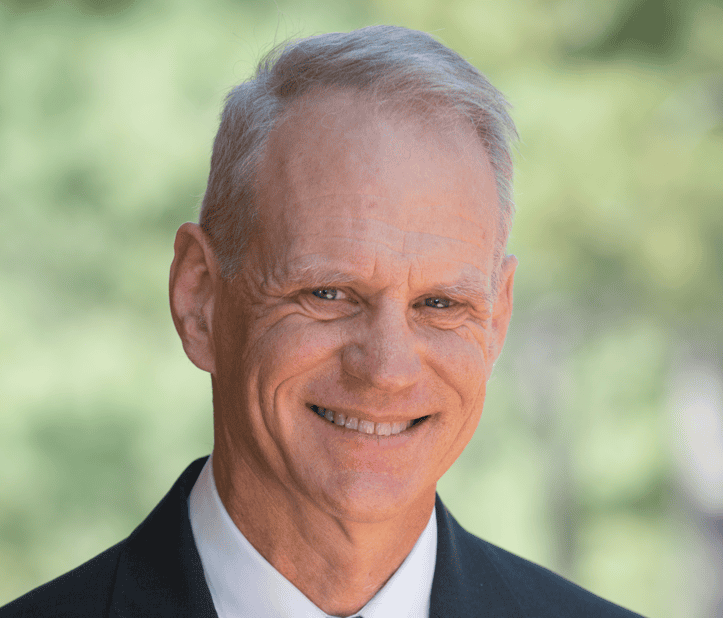
Bruce Sidebotham gained his DMin from New Geneva Theological Seminary. He obtained his MA in Intercultural Studies from Columbia International University. He has been a missionary among Muslims with Pioneers, and he is a retired US Army Reserve Colonel and Chaplain. He finished his reserve career as senior Chaplain in the Army’s Civil Affairs and Psychological Operations Command. He currently assists Telios Law in developing online human resources.
EMQ, Volume 62, Issue 1. Copyright © 2026 by Missio Nexus. All rights reserved. Not to be reproduced or copied in any form without written permission from Missio Nexus. Email: [email protected].