Developing Spiritual Resilience for Workers Among Nomads
By Evelyn Hibbert, Lance Williamson, and Barbara Williamson | Spiritual resilience enables missionaries to persevere in the face of difficulties. It is developed through nurturing spiritual disciplines and relationship with God and others. It increases with experience of hardship. This article reports the views of workers among nomads. Speaking from experience, these missionaries provide insights which help us in our own lives and as we select and train new missionaries.


EMQ » Oct – Dec 2025 » Volume 61 Issue 4
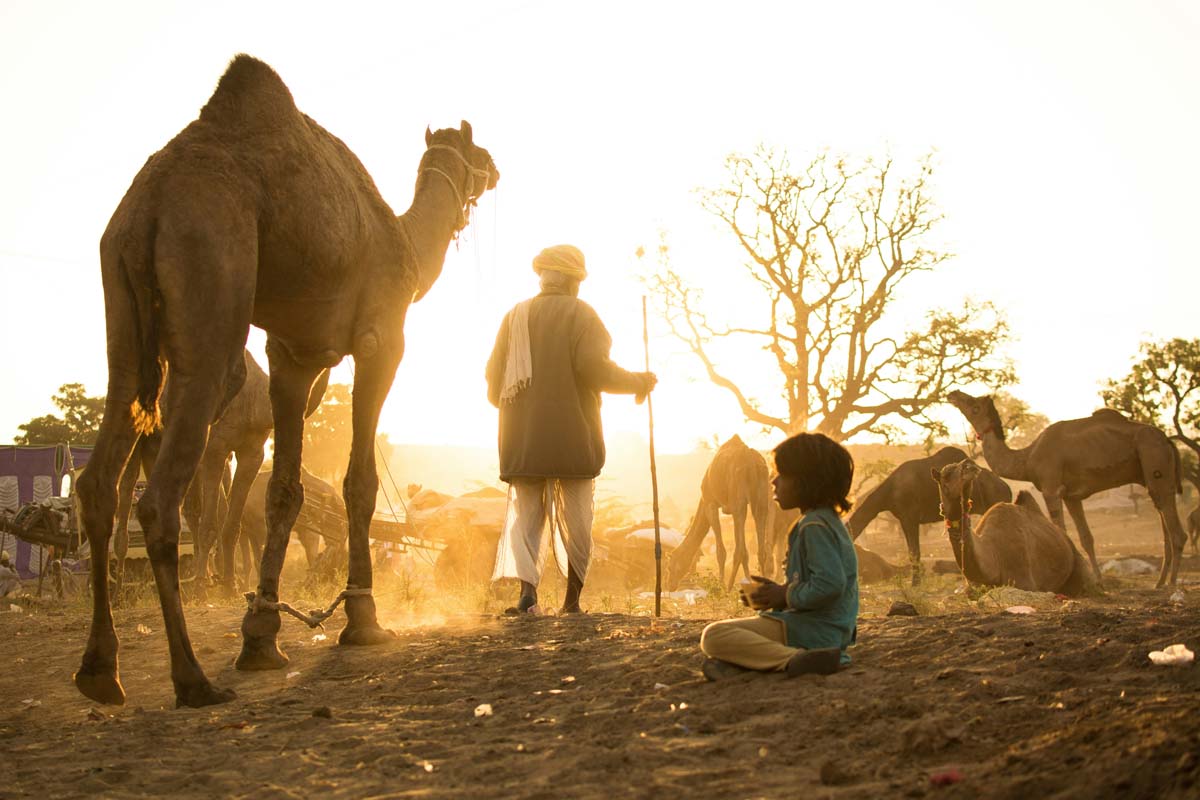
Summary: Spiritual resilience enables missionaries to persevere in the face of difficulties. It is developed through nurturing spiritual disciplines and relationship with God and others. It increases with experience of hardship. This article reports the views of workers among nomads. Speaking from experience, these missionaries provide insights which help us in our own lives and as we select and train new missionaries.
By Evelyn Hibbert, Lance Williamson, and Barbara Williamson
Cross-cultural missionaries, especially those working away from their home countries, face unpredictable and unfamiliar problems with relative isolation from support systems at home.[i] To succeed in these situations, missionaries need to develop spiritual resilience. This enables them to persevere, confident in their faith while they adjust to their context. Being able to build strong relationships with locals and fellow missionaries also helps.
Discouragement and failure are unavoidable. But these provide opportunities for growth. If missionaries are secure in themselves, their relationship with God and others, then they are more ready to take the risks necessary to advance the kingdom of God into new regions.
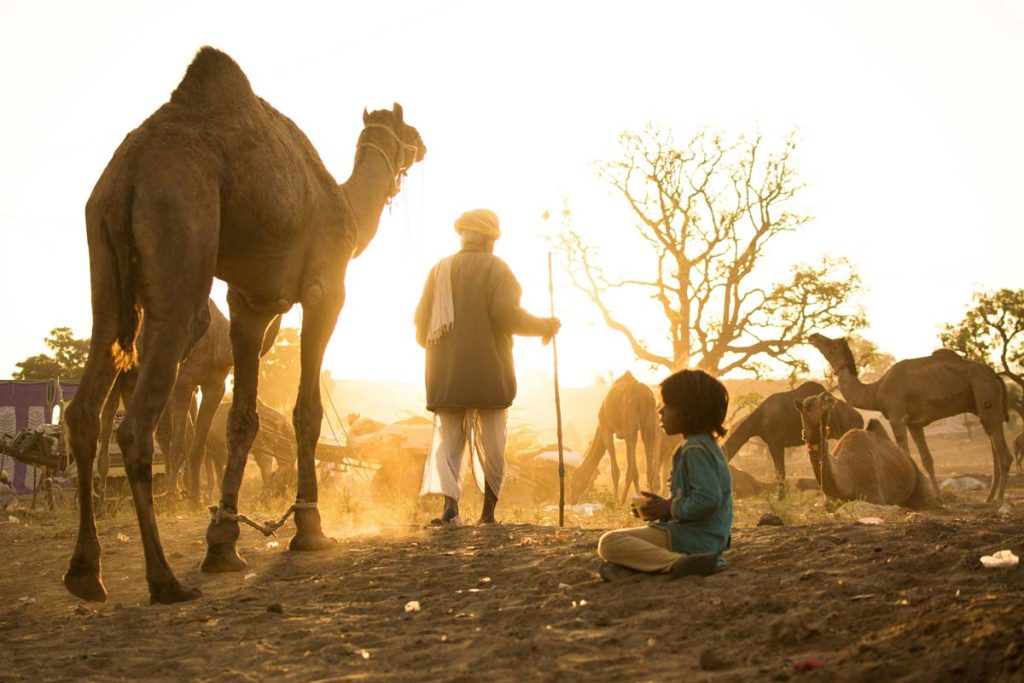
In 2018, we interviewed 37 people working among nomads.[ii] Nomads are among the least reached people on the earth.[iii] They are challenging to reach because they live in geographically remote areas and move often. Although some settle in towns, they may disappear for unpredictable periods of time. Missionaries seeking to work among them often struggle with isolation, health, travel hazards, lack of privacy, and security problems. These compound the normal challenges of cross-cultural mission among sedentary people.
Given the difficulty of mission among nomads, we believe their insights about spiritual resilience are helpful for all of us. They considered resilience as founded on a strong relationship with God. Good relationships with peers support it. They stressed the importance of being self-aware and said a keen sense of humor helps. Spiritual disciplines, experienced mentors coming alongside, and peer support during difficulty all help to develop resilience.
Fifteen of the interviewees came from the US. The rest came from nine other countries or regions.[iv] Seven were from national churches and one was from a Majority World mission sending agency. Nine mission agencies were represented.[v] In this article we report on interviewees’ responses relevant to spiritual formation and resilience given in answer to the questions:
- What kind of people (character, understanding and skills) would you like to join you in this (or in similar) ministry?
- Are there things you feel you could have been better prepared for before you arrived on the field?
- Do you have any suggestions for missionary training institutions or entities for how to prepare people for this kind of ministry?
What Impacts Spiritual Resilience?
Spiritual resilience enables people to persevere in ministry despite difficulties. Donna[vi] describes resilience as being “kind of willing to take things in stride and make it work, even if you just need a whole lot of grace for yourself and your body.” Several interviewees stressed the importance of being flexible.
Resilience is strengthened by good relationships. Donna added, “sharing with others what you’re struggling with because then they can support you.” This is possible only if you have “a solid relationship with God.”
The foundation for spiritual resilience is a strong relationship with God. Jane explains that time with God is “more important than any other work that you do.” This enables you to “keep a joyful attitude and to look for the best in situations” and overcome any tendency towards thinking that “ministry equals productivity.” Without a “vibrant spiritual life … You’re setting yourself up to fall pretty hard.” Alex describes it as godliness based on “a walk with God that sustains them in the midst” of a spiritual battle. He considers this more important than character traits.
A sense of humor helps. Matt expanded, “Need a very good sense of humor. Laugh at yourself a lot. It’s a hard country. The environment is difficult. The language is quite difficult. If you can’t laugh at yourself when things go wrong, you’re not going to survive.”
Physical health and family relationships affect spiritual resilience. Sickness is common and discouraging. Rhonda explained, “you have very different diseases … and those can just wipe us out. … and you’re already emotionally drained or spiritually drained and then you have physical drain.” Alex felt that his marriage had been attacked and others struggled with gender expectations in their context.
Interviewees stressed the importance of a strong, obedient relationship with God and a passion for the lost. The basis for this is disciplined habits of devotion, including prayer, established before coming to the field. These must be maintained throughout the stress of cultural adjustment. These habits sustain spiritual resilience when little external support is available.
Knowing their Bible well helps missionaries cope when people from other religions attack what they believe in. For example, Colin observed, “they need to understand … their own theology and the incarnation and … the atonement that all has to be very clear in their minds. Personally, they’re going to need it for their own defense as they get into the rough stuff.” Karen frames it as needing a “self-care kind of how to study the Bible for yourself to keep yourself alive out there.” She added that “falling in love with the Scriptures,” the “feeding of your own soul stuff” is “something that’s caught more than taught.”
Another matter impacting spiritual health is spiritual warfare. Most Westerners are not well prepared for this. It includes knowing how to cope with opposition from the enemy, nightmares, strange experiences, sensing of demonic presence, witchcraft, and curses. Robert outlined some of his experiences and their effect on his resilience.
I’ve experienced nightmares that wake me up. And when I wake up, I can’t speak and my legs are pinned to the ground. What do I do with that weight? … How do I respond or my language helper’s sister who’s in the room next door? Every time I come in the room, she starts babbling and her eyes just look up at the sky, roll back in her head. I don’t know what to do with this person. … And so being prepared to respond in spiritual warfare, that’s a big thing because if we don’t, that affects our resilience. It wears us down. It restrains us from being free to do ministry. And if you’re not free to do ministry and we get to spend a lot of time feeling ineffective and eventually you’re going to leave … So, part of resilience is feeling like I’m able to … address all of the issues, including spiritual warfare issues that come at me in the course of… life in this context and continue to live in freedom and power of Christ. … It sounds easy until you’re actually experiencing it. So, do you have a way of thinking about that that would let you address those problems?
Resilience will be tested through relationships. Team members can struggle with one another so much they don’t notice the enemy dividing and distracting them. Similarly, community dynamics can affect individuals’ resilience. Karen Carr and Frauke Schaefer, who researched trauma among missionaries,[vii] found that, as missionary communities are often small and close-knit, one person struggling with hardship tended to affect others in that community.
It helps if workers understand themselves. This means they are aware of their strengths and weaknesses. They recognize their personal limits and capacity. They know how they interact with workmates. Craig expanded this description,
the ability to kind of perceive how … you’re making them feel or how they’re feeling as you’re saying something or in a situation … That’s a mentality and a desire, you know, to want to know how people are experiencing you or the situation.
Robert remarked knowing our limits and capacity enables us “to thrive on the field for the long-term.” This enables “a sustainable pace of life and ministry” rather than going for a couple of years then burning out. He added that it includes the “spiritual aspects of knowing ourselves, knowing our sin tendencies, our weaknesses and being honest with ourselves and … where I struggle, this is where I don’t struggle.” He recommends being accountable and practicing spiritual disciplines until we become comfortable with them. This means developing habits that are in place and nourish resilience before problems arise. “Then, they don’t lose their way when they’re in the desert.” Having the habits in place, he said, helps us to know “what spiritual resilience would look like” once we’re in the storm. Knowing what it looks like helps us to strive after it even when we don’t feel it as our experienced reality.
Carr and Schaefer identified factors that strengthen resilience. These included good support during crises and disciplined spiritual practices. Focusing on relationship with God rather than ministry for its own sake was important. A healthy theology of suffering and an inclination to forgive helped. They highlighted, “Having a sense of control of one’s life, not easily being discouraged by failure, the ability to handle unpleasant feelings, and a strong sense of purpose” helped missionaries cope with trauma.[viii] Jane’s experience, while not specific to trauma, sketches the impact of lack of control. She shows the importance of forgiveness for resilience in work among nomads.
when we’re out in the camp, we don’t get alone time. Like, I wake up. I’m immediately with all of my teammates… I can walk off into the bush to maybe try to shower or something like that. But I don’t have any opportunity to just sit and be alone. And so you have to be willing to be quick to ask for forgiveness and be quick to forgive and you have to resolve conflicts right away. … there’s no avoiding. You’re going … to be sharing food off of the same platter with your hands by the end of the day.
Developing Resilience
Through their resilient worker research, Geoff and Christina Whiteman identified that global workers wanted more training in relational, cultural, practical living and ministry, and soul and self-care skills.[ix] For soul and self-care skills, the Whitemans’ research participants wanted spiritual formation, and more training in spiritual warfare, theology, and missiology. These apply to all cross-cultural missionaries.
Both the Whitemans and Carr and Schaefer highlighted that where people engage with difficult experiences as learning experiences, they grow. They learn to support themselves through deepening their relationship with God.
Interviewees in our research stressed the value of experienced workers who walk alongside new workers. In this way, new missionaries learn through the example and relational support of more resilient workers. In challenging contexts, such as work among nomads, more experienced missionaries have had ample opportunity to learn resilience through repeated challenges and hardship. As Linda commented, “we’ve talked about it and read about it – they’ve lived it.”
It’s also helpful to recognize that no one begins ministry fully formed. As Robert said, “God designs the journey for learning.” Jane added, “there is no way to be enough prepared.” Learning comes through experience.
It may be that the best way to develop spiritual resilience is in the crucible of difficult life and ministry, while having alongside support. However, how do we ensure that those who are immersed are ready to cope, especially in difficult ministries such as among nomads? Perhaps we could select from Christian communities with more experience of life’s difficulties. A short-term trip might be sufficient. But there is a major difference between short-term experience and full immersion, having uprooted one’s life and family.
One suggestion from interviewees was to select recruits for work among nomads who already display the necessary strength of character. They suggested recruiting people who are “real tough boy scouts,” “very strong characters,” “willing to stay in and persevere,” “willing to rough it a little,” “physically strong,” and “hardy.” It helps if they love camping and are “not too fussy about hygiene and clean food.”
We can certainly foster a deep and practical knowledge of the Bible.[x] Colin reflected, “Missionaries need to really know God and Jesus and love Jesus and the Bible and … Learn how to study the Bible on their own for themselves and not depend on their professors or their commentaries… Any missionary has to be able to really know God himself/herself, to be able to encourage other people to get their fuel from God.”
Developing spiritual resilience is our collective responsibility. In remote settings such as work among nomads, outsiders may not be available to help immediately. Of course, organizations should not neglect support and external member care. But they should also promote personal and interpersonal resilience. This is relevant to missionary selection, preparation, and continuing development.
Closing Thoughts
In today’s world, and especially in Western churches, missionary heroism is out of fashion. But often we forget that all Christians (including missionaries) are weak in the face of challenges, because it is Christ who gives us strength (2 Corinthians 12:9). If the apostle Paul is our missionary example, then trauma and difficulty are a normal part of missionary work (2 Corinthians 11:25). We need to rediscover this dimension of spirituality in the comfortable West, learning from our brothers and sisters in the rest of the world where it is normal Christian life. After all, it is inseparable from carrying the good news to places where people do not know Jesus. And surviving shipwrecks, being beaten and imprisoned, while scary, is part of witness to Christ who enables us to do all things (Philippians 4:13). As Hans found,
sometimes there are frightening situations. But if they see that you are strong and bold, that’s something they respect a lot . … that you can stand for something, yes, and defend your position even with your life . … they knew I was very bold travelling through … the country during the war, you know, and even though I got carjacked several times and crazy things happened, … and I was just a fearless person. … it just it made them appreciate me
We are not advocating that missionaries should seek out danger or difficult circumstances. But we remind ourselves that, as Christ’s witnesses, we should expect to face difficult challenges.
The keys to resilience are relational. First is a strong relationship with God, then with his people. Spiritual disciplines nurture these relationships. Experienced mentors and local and expatriate friends support it. Knowing ourselves and being quick to listen and forgive helps these friendships flourish. And if we persevere, we will see resilience’s fruit in ourselves and others.
[i] Evelyn Catherine Hibbert and Richard Yates Hibbert, Training Missionaries: Principles and Possibilities (William Carey Library, 2016), 27–29.
[ii] For more details about this research and its results see: Evelyn Catherine Hibbert et al., “How Should We Prepare People for Ministry to Nomads?,” Missiology: An international review 52, no. 1 (2023), https://doi.org/10.1177/00918296231208385; Evelyn Catherine Hibbert et al., “Developing a Missiology for Ministry to Nomads,” Missiology 51, no. 2 (2023), https://doi.org/10.1177/00918296231151608.
[iii] Caleb Rome, “Sheep in Need of a Shepherd,” chap. 15 in Fruit to Harvest: Witness of God’s Great Work among Muslims, ed. Daniels et al. (William Carey Press, 2019), 223.
[iv] Australia (3), Canada (1), Caribbean (1), Central Asia (2), East Africa (3), East Asia (2), South Asia (2), Switzerland (2), UK (1). Five did not provide their nationality.
[v] C&MA (1), CVM (5), Frontiers (5), IMB (2), OM (1), Pioneers (2), SIM (5), UWM (1), and Wycliffe (2). Five did not provide their affiliation.
[vi] Pseudonyms similar to names in interviewees’ country of origin have been used to help personalise the data reporting.
[vii] Karen Carr and Frauke C. Schaefer, “Trauma and Traumatic Stress in Cross-Cultural Missions: How to Promote Resilience,” Evangelical Missions Quarterly 46, no. 3 (2010), https://missionexus.net/2010/07/01/trauma-and-traumatic-stress-in-cross-cultural-missions-how-to-promote-resilience/.
[viii] Carr and Schaefer, “Trauma and Traumatic Stress in Cross-Cultural Missions: How to Promote Resilience.”
[ix] Geoff Whiteman and Kristina Whiteman, “Supporting Today’s Global Workers toward Missional Resilience,” Evangelical Missions Quarterly 58, no. 2 (2022), https://missionexus.net/2022/04/01/supporting-todays-global-workers-toward-missional-resilience/.
[x] Hibbert and Hibbert, Training Missionaries: Principles and Possibilities, 48–49.

Evelyn Hibbert worked among a movement of Turkish-speaking, Muslim-background people to Christ in Bulgaria. She is a researcher with the Angelina Noble Centre and the Editor of EMQ.

Lance and Barbara Williamson worked with nomads in the Horn of Africa for 12 years. They currently teach at Sydney Missionary and Bible College and are involved in ministry to migrants in Australia.
EMQ, Volume 61, Issue 4. Copyright © 2025 by Missio Nexus. All rights reserved. Not to be reproduced or copied in any form without written permission from Missio Nexus. Email: [email protected].