Discerning God’s Will: Learning from Hudson Taylor and Ignatius of Loyola
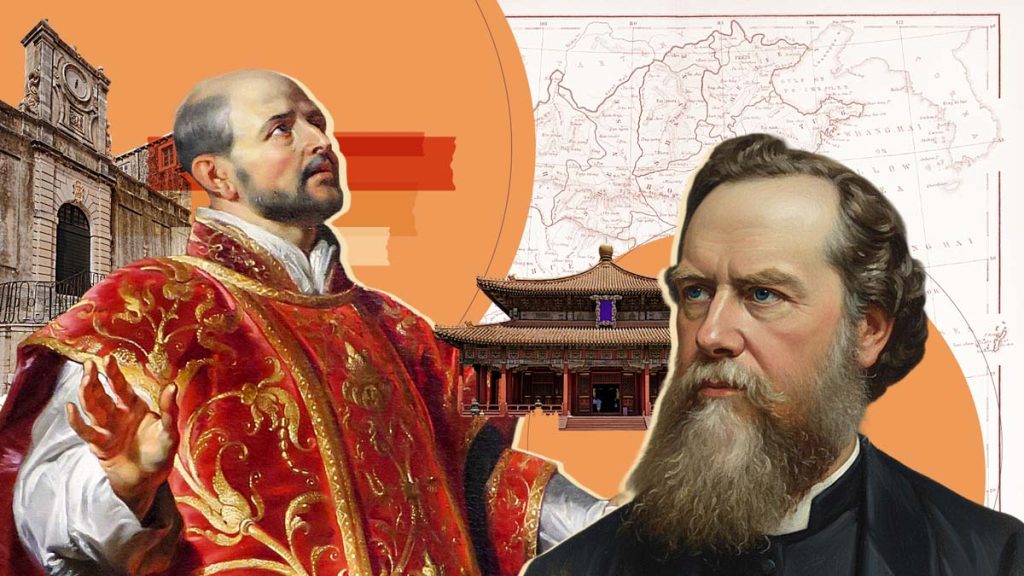
By Jasmine Lee | Hudson Taylor and Ignatius of Loyola both emphasized the role of emotions and a strong relationship with God in discerning God’s will. Taylor relied on prayer and waiting for God's guidance, while Ignatius developed the structured approach taught through his Spiritual Exercises. Their methods, which bridge thinking and feeling, remain relevant for today's missionaries seeking to discern God's will.


EMQ » Oct – Dec 2025 » Volume 61 Issue 4
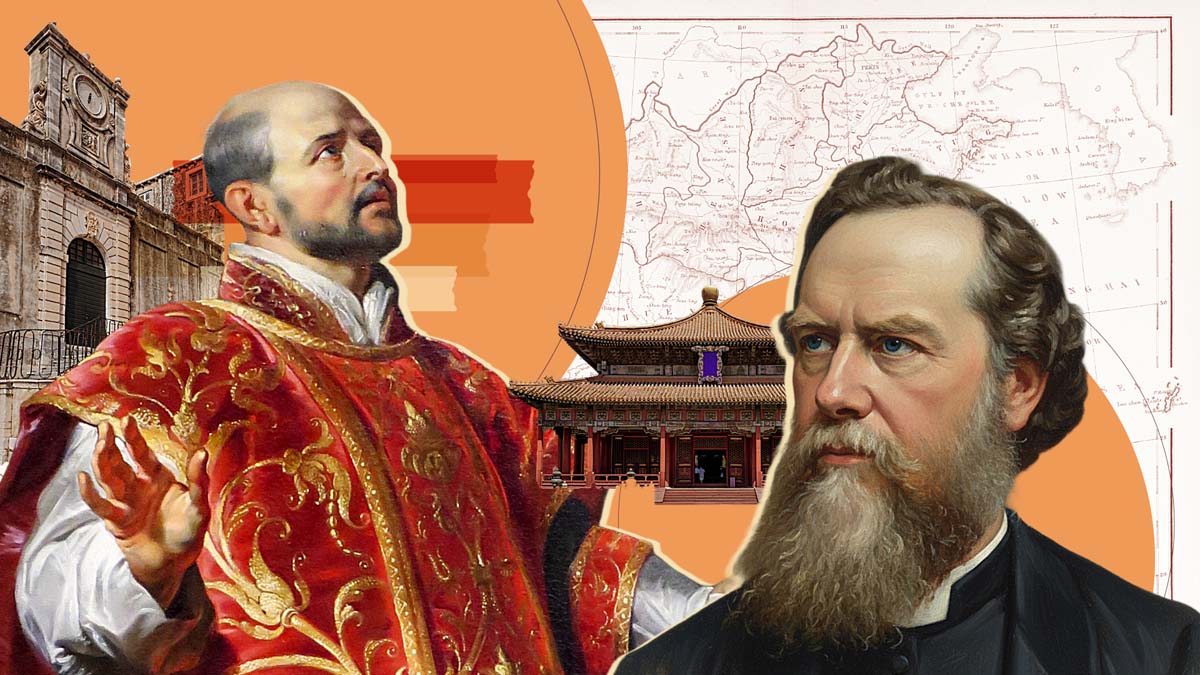
Summary: Hudson Taylor and Ignatius of Loyola both emphasized the role of emotions and a strong relationship with God in discerning God’s will. Taylor relied on prayer and waiting for God’s guidance, while Ignatius developed the structured approach taught through his Spiritual Exercises. Their methods, which bridge thinking and feeling, remain relevant for today’s missionaries seeking to discern God’s will.
By Jasmine Lee
When difficulties arise during ministry, knowing that God wants us to be there helps us persevere. It also helps us look for joys which build resilience day by day. This resilience comes both through that experience but also through the memory of how God has blessed in the past. But discerning God’s guidance is not always straightforward. It is also a subject that has attracted much debate among Christians in the past.
Hudson Taylor and Ignatius of Loyola are two missionary statesmen who have much to teach us about how to discern God’s will. Taylor’s insights, gained through personal experience, are communicated through biographical material and pamphlets which he and his followers published. Ignatius developed a way of doing spiritual discernment which his followers used and passed on. This system is still in use today. In both cases, these men bridged the gap between thinking and feeling, which many have struggled with when trying to discern God’s will for their lives. This article first gives an outline of views about guidance. It then presents Taylor’s and Ignatius’ approaches and discusses their relevance for today’s missionaries.
Does God Guide Individuals Today?
Our views of God’s will and how he communicates with his people affect whether we believe God guides individuals today. People generally agree that God has a sovereign will and a moral will.[i] God’s sovereign will refers to what he will carry out regardless of human will. He communicates his moral will through biblical commands. We must obey these commands in anything we do. People also debate God’s amoral will.
Amoral will relates to decisions where Scripture neither forbids nor prescribes what we should do. For example, God’s amoral will is relevant when deciding about a specific country or ministry. In this sense, choices are neutral if God’s commands are still fulfilled. But discerning God’s amoral will causes the most debate and anxiety for Christians.
Evangelicals have three perspectives about these amoral decisions. Some believe that God has a specific will for individuals and that he communicates it to them.[ii] People discover that specific will through signs revealed in prayer, Scripture, external circumstances, and advice from wise believers.[iii] Others react against the specific will view.[iv] They assert God has no specific will for an individual. Therefore, people can decide based on wisdom received through prayer, Scripture, advice from wise believers, and experience. A third position focuses on the relationship a believer has with God. In this view, God’s will is revealed and discerned internally through the Holy Spirit.[v]
Although all three views require some form of internal process, it is largely mysterious. The specific and wisdom approaches tend to overemphasize thinking and biblical literacy. They oversimplify or exclude the role of emotions respectively. In contrast, the relationship view recognizes the role of emotions and stresses love that motivates Christians’ actions.[vi]
The work of the Holy Spirit in guiding Christians is often in the form of emotions (e.g., peace, a burden, a desire). But it can be difficult to determine the source of emotions, especially in the stress of major life decisions. Although the word “discernment” is often applied to deciding God’s will, in Scripture the focus is on identifying true and false spirits (1 Corinthians 12:8–10). However, the connection to discerning God’s will is clear as people seek to work out whether their guidance comes from God (the true spirit) or some other source (a false spirit). Emotions are an integral part of evaluating whether the inclination towards a particular decision is from God.
As missionaries often move into unknown territory, personally or geographically, being able to discern God’s preferred path is essential for their spiritual well-being. Without this conviction, it can be difficult to overcome the challenges mission work involves. Taylor founded the China Inland Mission in the nineteenth century and has been an exemplar for thousands of missionaries in later centuries. Ignatius began the Roman Catholic Jesuit order in the sixteenth century. Both men’s missionary societies were initially strongly focused on indigenizing approaches. They both based their discernment on a strong relationship with God. By comparing the records of how both men discerned God’s will, we gain practical insights which are still helpful for us today.
Learning from Ignatius and Taylor
Ignatius wrote The Spiritual Exercises as a manual for a 30-day prayer retreat for those seeking to deepen their relationship with God. These Exercises are still in use today. Emotions are an important part of the retreat process and in learning to discern God’s amoral will. First, the motivation for missionary service is passion for God and love for neighbor. Second, competing desires become unimportant such that people only want to obey God’s will. Third, feelings help to evaluate the spiritual source of emotions attached to choices. This evaluation is based on scriptural commands and developing spiritual-emotional maturity to understand how an individual’s emotional state signals both how God is communicating as well as confirming his communication.[vii] Finally, when evaluating emotions, interior peace, true lack of attachment for other things, emotional attachment to God, and love confirm God’s guidance.
Information about Taylor comes from biographies and quotations from Taylor’s diaries and letters in CIM history publications.[viii] He described his decision-making process as, “to begin with God, to ask His plans, and to offer ourselves to carry out His purposes.”[ix] He prayed for God to reveal his will. He waited for God’s answer. Sometimes, he prayed for confirmation, then waited for God’s confirmation. Then he acted on God’s will. Like Ignatius, his primary compulsion was passion for God and love for neighbor, particularly those perishing without the gospel in China. Taylor’s experience shows how feelings can help to evaluate the spiritual source of emotions. Taylor experienced God’s guiding sometimes like a voice, an impulse, assurance, thought, or recollection of biblical verses or principles. He also noted the presence or lack of emotions. These included, “loss of joy,” “choking at his own words,” a “heart … now at rest,” “calmness – and more than calmness – thankfulness and joy,” “distress,” “annoyance,” or “a lifted burden.”[x]
Discerning the source of a thought can be difficult. Both Ignatius and Taylor refer to how false spirits can masquerade as angels of light (2 Corinthians 11:14). Taylor describes an incident where Hosea 4:17 came into his mind to support his not sharing the gospel with a difficult person. However, he disobeyed that thought, leading the person involved to Christ. In that situation, the adversary sought to lead Taylor astray, even by using a Bible verse. To discern the true source of such thoughts, spiritual-emotional maturity is necessary. Ignatius taught that this is developed through the experience of obeying the Holy Spirit on moral matters before tackling amoral ones.[xi]
Ignatius and Taylor outline a process that can help us discern God’s will for any situation. It starts with passion for God. As we come to love him more deeply, we also increase in love for our neighbors – the people we share this earth with and for whom Jesus died. Love may be a duty expressed in action. However, it is chiefly a feeling we should ask God for more of. Ignatius taught his followers to ask God repeatedly for God’s feelings. They did this through being immersed in the Bible and asking the Holy Spirit to train their hearts to feel as God feels.
The next step is to seek only what God wants. This means actively detaching ourselves from desire for other things. To learn this, Taylor asked for, “self-denying service…however trying or however trivial.”[xii] But, as Ignatius teaches, self-denial is only the first half. Beyond this, we need to learn to desire what God wants us to desire.
Many of us will have heard people describe lots of ways of discerning God’s voice on guidance. These include thoughts, Bible verses, hunches, feelings, and lists of pros and cons. Ignatius helpfully categorizes these into God’s direct revelation, emotion sifting, and reasoning. Each is valid. It is important to recognize that direct revelation is rare.
External signs, like Gideon’s fleece (Judges 6:36–40), are often raised in discussions about God’s guidance. These can include words, open doors, and finances. Both Taylor and Ignatius expected God to communicate directly with his children. They both encouraged Christians to wait to hear from God himself rather than relying on other Christians. When others give advice, they recommend testing it by evaluating the emotions it evokes. Other signs can also be reviewed in the same way. Ignatius adopted a vow of poverty for the Jesuits. Similarly, Taylor set up the faith principle for the CIM. When they received finances, they tested them before accepting them as a sign of guidance.
Closing Thoughts
Although some deny that God still speaks to individuals today, many testify to God’s specific guidance. Many others struggle to discern it. Both Taylor and Ignatius believed that God guides his children. Through their experience and instruction, we can learn to better discern God’s will.
Discernment is holistic. It involves spirit, mind, and emotion. As the non-cognitive elements are more difficult for us to evaluate, Taylor and Ignatius can help. The first step is passion for God and people based on a deepening relationship with God. After this, we grow in denying self. This is not an end in itself. It is a means to desire what God desires. Third, having learned to obey the Holy Spirit for biblical commands, we learn to test any guidance according to the emotions it evokes. Similarly, we test any words of advice or other signs by the same criteria. As we grow in this, we develop spiritual-emotional maturity. Finally, our emotional state verifies the guidance. We should have peace, deeper attachment to God and less attachment to the world. Being sure that God is guiding us means we can advance confidently and have the resilience to weather the storms we face on the way.
[i] Douglas S. Huffman, How Then Should We Choose?: Three Views on God’s Will and Decision Making (Kregel Publications, 2009).
[ii] Henry Blackaby and Richard Blackaby, “Discerning God’s Will: The Specific-Will View,” in How Then Should We Choose?: Three Views on God’s Will and Decision Making, ed. Huffman (Kregel Publications, 2009), 33.
[iii] Henry T. Blackaby et al., Experiencing God: Knowing and Doing the Will of God, rev. ed (LifeWay Press, 2007).
[iv] Garry Friesen, “Walking in Wisdom: The Wisdom View,” in How Then Should We Choose?: Three Views on God’s Will and Decision Making, ed. Huffman (Kregel Publications, 2009); Garry Friesen and J. Robin Maxson, Decision Making & the Will of God: A Biblical Alternative to the Traditional View (Multnomah Press, 1980).
[v] Gordon T. Smith, The Voice of Jesus: Discernment, Prayer, and the Witness of the Spirit (InterVarsity Press, 2003); Gordon T. Smith, Listening to God in Times of Choice: The Art of Discerning God’s Will (InterVarsity Press, 1997).
[vi] James K. A. Smith, Desiring the Kingdom: Worship, Worldview, and Cultural Formation (Baker Academic, 2009), 47, 51–52.
[vii] For a more in-depth exploration of Ignatian and Taylor’s spirituality and the sources on which this exploration is based, see Jasmine Lee and Evelyn Hibbert, “The Role of Emotions in Discerning God’s Will in Missions: A Comparison of the Approaches of Ignatius of Loyola and J. Hudson Taylor,” Missiology: An international review 53, no. 3 (2024): 293–305, https://doi.org/10.1177/00918296241305399.
[viii] e.g., Geraldine M. Guinness, The Story of the China Inland Mission, vol 1 (China Inland Mission, 1900); Geraldine M. Guinness, The Story of the China Inland Mission, vol 2 (China Inland Mission, 1900); Howard Taylor and Geraldine Taylor, Hudson Taylor in Early Years: The Growth of a Soul (Hodder & Stoughton, 1912); Howard Taylor and Geraldine Taylor, Hudson Taylor and the China Inland Mission: The Growth of a Work (Religious Tract Society, 1918).
[ix] Taylor and Taylor, Hudson Taylor and the China Inland Mission: The Growth of a Work, 355; Marshall Broomhall, Hudson Taylor: The Man Who Believed God (China Inland Mission, 1929), 171, https://missiology.org.uk/pdf/e-books/broomhall-m/hudson-taylor_broomhall.pdf.
[x] James Hudson Taylor, A Retrospect (China Inland Mission, 1894), https://www.gutenberg.org/files/26744/26744-h/26744-h.htm.
[xi] Michael Ivens, Understanding the Spiritual Exercises: Text and Commentary: A Handbook for Retreat Directors (Inigo Texts, 2016), 314–15.
[xii] Taylor, A Retrospect, 7.

Jasmine Lee lectures in Christianity in History as well as Practical Theology at Sydney Missionary and Bible College, Australia. She served as a missionary with OMF International in SE Asia and was involved in student and young adults’ ministries in a large regional town.
EMQ, Volume 61, Issue 4. Copyright © 2025 by Missio Nexus. All rights reserved. Not to be reproduced or copied in any form without written permission from Missio Nexus. Email: [email protected].