From Our Knees to the Nations
By Chris McMillan | Prayer is central to the life and mission of the church. As Christians increasingly pray, they become convicted about sin in their midst, and the need for conversion of sinners at home and beyond. This creates a sense of urgency that propels people into missions. If prayer is central to church life, mission will also move to the center.


EMQ » Oct – Dec 2025 » Volume 61 Issue 4
Summary: Prayer is central to the life and mission of the church. As Christians increasingly pray, they become convicted about sin in their midst, and the need for conversion of sinners at home and beyond. This creates a sense of urgency that propels people into missions. If prayer is central to church life, mission will also move to the center.
By Chris McMillan
The early chapters of the book of Acts portray the centrality of prayer in the life and mission of the church. Upon the ascension of Jesus, the disciples gave themselves to prayer in preparation for their mission (Acts 1:14). When church leaders were persecuted and commanded to cease their evangelistic activity, the church gathered and prayed for God’s intervention, resulting in the bold proclamation of the Word of God (Acts 4:1–31).[i] In Acts 6:1–7, internal schism threatened to splinter the church along racial lines. However, the apostles organized the church so that the centrality of prayer might not be hindered, thereby resulting in the multiplication of the gospel. A prayer meeting at the church in Antioch resulted in the launch of the very first missionary journey through Paul and Barnabas (Acts 13:1–3).
The inspired record of the early church indicates that prayer and mission are inextricably linked. Evangelical historian Richard Lovelace suggests that the enormity of the mission compels prayer: “Those who are praying about the needs surrounding them in the world are awakened to the greatness of those needs and the opportunity for the church to meet them.”[ii]
The inextricable link between prayer and mission established in Acts is also demonstrated in evangelical church history. The mid-seventeenth century brought with it a great spiritual malaise in colonial America. This spurred a cry among Puritan church leaders for an outpouring of the Holy Spirit that would revive their petrified churches. One such leader, a minister in Massachusetts named Samuel Torrey, declared in three different election day sermons his firm belief that only the Holy Spirit could awaken the churches from their slumber. As reports of pagan conversions in far-away places like the East Indies began to circulate in the colonies, Puritan ministers were stirred to pray even more for an outpouring of the Spirit that would lead to the conversion of sinners. Boston minister Cotton Mather took the lead in calling believers to pray: “Then will converting work go forward among the nations!”[iii]
Meanwhile, in Germany, strife threatened to tear apart the Herrnhut experiment of Count Nicholas von Zinzendorf. Remarkably, after a season of fasting and prayer, the dissension that had previously marked the community dissolved in a flood of grace; a miracle they attributed to a special visitation of the Holy Spirit. This Moravian Pentecost resulted in the drafting of a covenant between 26 members of the community to pray around the clock for the evangelization of the world; a prayer meeting that would last for one hundred years.[iv] By 1791, the Moravians had sent some three hundred missionaries across the globe.[v]
In October 1744, a group of Scottish ministers concerned about the spiritual decline in their churches and the low state of religion around the world, issued a call for concerts of prayer to occur throughout Christendom. They called for Christians to set aside a portion of every Saturday evening, Sunday morning, and the first Tuesday of each quarter for two years.[vi] Theologian and pastor Jonathan Edwards responded to the call with a publication of his own, An Humble Attempt to Promote Explicit Agreement and Visible Union of God’s People in Extraordinary Prayer for the Revival of Religion and the Advancement of Christ’s Kingdom on Earth. Through this, he sought to unite prayer efforts of Christians around the world, believing that concerted prayer is the catalyst in renewing the church and bringing in a worldwide harvest. In commenting upon Zechariah 8:20–22, Edwards sought to convince his readers that united and sustained prayer is the means whereby the gospel is propagated, and the nations brought to Christ.[vii]
After the American War of Independence (1776–81), the new nation entered a period of sustained moral decline. Revival historian J. Edwin Orr notes that drunkenness, profanity, and violence had reached epidemic proportions.[viii] However, the nineteenth century would also produce two powerful prayer movements that brought about a great number of conversions.
In 1806, a budding missionary and congregational pastor’s son named Samuel Mills, Jr. enrolled in Williams College in Massachusetts. There he spent Wednesdays and Saturdays in prayer with other students. In August of that year, Mills and four of his friends were returning from one of these prayer meetings and were caught in a vicious rainstorm. Having taken shelter underneath the eaves of a haystack, they waited out the storm by giving themselves to prayer. They prayed for a spiritual awakening among the student body and committed themselves to going wherever the Lord needed them. This momentous event came to be known as the Haystack Prayer Meeting and, according to eminent church historian Kenneth Scott Latourette, became the catalyst that launched the American missionary movement.[ix]
In the mid-nineteenth century, the pursuit of materialism precipitated another spiritual decline. The pastor of the Nineteenth Street Presbyterian Church in Manhattan, James A. Alexander, lamented the poor spiritual state of true evangelical faith in his city and began to preach about the need for renewal and reform. A layman by the name of Jeremiah Lanphier, took Alexander’s call to prayer to heart and on September 23, 1857, began a weekly noontime prayer meeting at the North Reformed Dutch Church in Lower Manhattan.
The prayer meetings grew so quickly that by October they were daily occurrences and filled room after room. Soon prayer meetings were popping up all over the city. The growth of the meetings captured the attention of the Daily Tribune, which wrote, “Soon the striking of fine bells at noon will generally be known as the ‘Hour of Prayer.’” In mid-March of 1858, more than three thousand people attended a prayer rally at Burton’s Theatre. While there had been mass prayer movements before, the uniqueness of this prayer movement is found in the number of conversions it produced. By June of 1858, some fifty thousand conversions had been reported in New York City and more than two-hundred thousand across Northeast USA.[x]
At the turn of the twentieth century, mission languished once more. However, prayer meetings began to pop up around the world in places like the Moody Bible Institute in Chicago, the Keswick Convention in England, Melbourne, Australia, Korea, and India. According to J. Edwin Orr, the rumblings of a mighty outpouring of the Spirit in Wales beginning in 1904 inspired a great prayer movement in the United States. So much so that by 1905, 25 percent of the students at Yale University were enrolled in prayer meetings and Bible study. In Atlantic City, a city housing a population of fifty thousand, clergy reported only 50 persons unconverted. A report from Portland, Oregon stated that 240 downtown stores closed daily between 11:00 a.m.–2:00 p.m. for prayer.[xi]
While the twentieth century saw the evangelical movement grow in numbers and political influence, the prayer movements that shaped the past are relatively unknown in contemporary evangelical churches. Evangelicals may attest to the centrality of prayer. However, in many churches, prayer has become an ancillary part of corporate worship.[xii]
British evangelist Leonard Ravenhill identified the lack of consistent and passionate prayer as one of the primary reasons for the declining state of the evangelical church in the West. In his most widely read book Why Revival Tarries, he laments,
“No man is greater than his prayer life. The pastor who is not praying is playing; the people who are not praying are straying. . . Poverty stricken as the church is today in many things, she is most stricken here, in the place of prayer. We have many organizers, but few agonizers; many players and payers, few prayers; many singers, few clingers; lots of pastors, few wrestlers; many fears, few tears; much fashion, little passion; many interferers, few intercessors; many writers, but few fighters. Failing here, we fail everywhere.”[xiii]
But why has prayer been abandoned in the contemporary church? Richard Lovelace lists the various dangers that threaten prayer in the life of the church. He identifies a focus on man-centeredness rather than dependence upon God, a general discomfort with models requiring marathon prayer, pride, lack of private prayer, estrangement from others, and spiritual forces that seek to hinder one from prayer (2 Corinthians 10:4). According to Lovelace, prayer is the key to renewal and vibrant discipleship. He notes that prayer is the “instrument that releases the mighty acts of Christ in history” (John 14:12–14; Mark 11:23; Luke 10:19). Additionally, dependent prayer is the means whereby the disciple is made to “understand the mind of Christ toward our mission and the work of the kingdom” (John 15:15; Romans 8:26).[xiv]
For many evangelicals, prayer is centered upon their own narrow personal interests and concerns. There is no sense of a greater kingdom orientation in prayer. In comparing the prayers of Paul to modern believers, theologian D. A. Carson laments the effects of paganization upon believers: “If the center of our praying is far removed from the center of Paul’s praying, then even our very praying may serve as a wretched testimony to the remarkable success of the process of paganization in our life and thought.”[xv] Carson’s point is not that earnestly praying for one’s needs is a pagan practice, but instead that our hyperfocus on self in prayer is alien to the kingdom orientation of prayer we find in the New Testament.
Jesus’ command to pray for laborers in the harvest field presents an incredible opportunity to join Him in His mission (Luke 10:2). The most common word for prayer in the New Testament is προσεύχομαι. However, here Jesus uses the word δέομαι instead, which means, “to beg,” “implore,” or to feel a “pressing need.” The idea is one of urgency. Our prayers for the nations should be offered with a sense of passionate urgency. Yet, in my own experience as a local church pastor for over twenty-seven years in both Pentecostal and Baptist settings I have rarely experienced this kind of prayer.
I distinctly remember the first time I experienced the kind of importunate and intense prayer Jesus commanded while visiting a prayer service in Mexico City. After several hours of glorious and intense intercession on behalf of the nations, I left the service in a state of shock trying to reconcile what I had just experienced with my experience at home in the United States. It was not merely the differences in culture that surprised me. It was the sense that the believers in Mexico City seemed to believe that life and death were in the balance and their prayers mattered.
For many years, hundreds of thousands of believers in South Korea have risen daily before dawn to gather and pray for the nations; a practice that has been ongoing since the great Korean Revival beginning in 1903. Is it any wonder then that South Korea sends out more missionaries per capita than any other nation?[xvi]
While we rightfully lament the general lack of dynamic prayer in the evangelical church, there are pockets in which remarkable prayer movements are occurring. In the US, perhaps the most famous of these are the weekly prayer meetings convened at the Brooklyn Tabernacle led by Pastor Jim Cymbala.[xvii] Additionally, Daniel Henderson leads a growing prayer ministry specifically designed to resource pastors and help them develop a culture of prayer in their churches.[xviii]
As this historical overview shows, dependent prayer is a means God uses to advance his kingdom and continually renew his people. Prayer should not be extraordinary in the life of the church. It is central to both the individual disciple’s spiritual life and the community’s life together. Richard Lovelace suggests that a reemphasis upon prayer would have a transformative effect upon Western Christendom.
If all regenerate church members in global church were to intercede daily, simply for the most obvious spiritual concerns visible in their homes, their workplaces, their local churches, and denominations, their nations, and the world and the total mission of the body of Christ within it, the transformation would be incalculable.[xix]
[i]Richard F. Lovelace, Dynamics of Spiritual Life (Intervarsity Press, 1979), 152.
2 Lovelace, Dynamics of Spiritual Life, 152.
3Thomas S. Kidd, The Great Awakening: The Roots of Evangelical Christianity in Colonial America (Yale University Press, 2008), 1–2, 8.
4A. Scott Moreau, Gary R. Corwin, and Gary B. McGee, Introducing World Missions: A Biblical, Historical, and Practical Survey (Baker Academic, 2004), 123.
5Leslie K. Tarr, “A Prayer Meeting That Lasted 100 Years,” Christianity Today, accessed January 28, 2020, https://www.christianitytoday.com/history/issues/issue-1/prayer-meeting-that-lasted-100-years.html.
6Jonathan Edwards, An Humble Attempt to Promote Explicit Agreement and Visible Union of God’s People in Extraordinary Prayer: For the Revival of Religion and the Advancement of Christ’s Kingdom on Earth (James Nisbet, 1831), 13–14.
7Edwards, An Humble Attempt to Promote Explicit Agreement and Visible Union of God’s People in Extraordinary Prayer, 9.
8J. Edwin Orr, The Role of Prayer in Spiritual Awakening, video (Dallas, Texas: National Prayer Congress, 1976), https://thecenterforawakening.com/what-must-we-do-to-see-god-work-j-edwin-orr-role-of-prayer-in-spiritual-awakening-1976-national-prayer-congress-revivalist-revival-awakening-renewal-jesus-now-tom-phillips-reformation-revival-definit/.
9David M. Howard, “Student Power in World Missions,” in Perspectives On the World Christian Movement, ed. Ralph D. Winter and Steven C. Hawthorne, 4th ed. (William Carey Library, 2013), 307.
10Iain H. Murray, Revival and Revivalism: The Making and Marring of American Evangelicalism 1750–1858 (Banner of Truth, 2009), 338–44.
11Orr, The Role of Prayer in Spiritual Awakening.
12Lovelace, Dynamics of Spiritual Life, 153.
13Leonard Ravenhill, Why Revival Tarries (Bethany House, 1959), 25.
14Lovelace, Dynamics of Spiritual Life, 155–56.
15D. A. Carson, Praying with Paul: A Call to Spiritual Reformation, 2nd ed. (Baker Academic, 2014), 76–77.
[xvi] Qian, Yong, AND Zhao, Yinji. “The rise and evolution of Korean Christian foreign missions and political interaction” HTS Teologiese Studies / Theological Studies [Online], Volume 81 Number 2 (14 January 2025)
18Lovelace, Renewal as a Way of Life, 160.
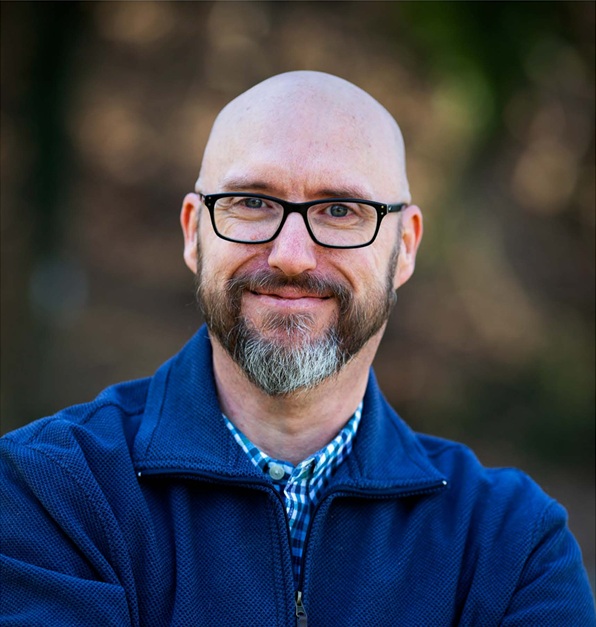
Dr. Chris McMillan spent 22 years pastoring churches in North Carolina, Maryland, and Virginia. Currently he serves the global church as President of International Training and Equipping Ministries (ITEM), an organization committed to providing non-formal theological and leadership training to majority world pastors. His passion for missions has taken him to over 30 countries. In addition to serving with ITEM, Chris has taught and lectured in Bible Colleges and Seminaries in Africa and Asia. He holds an earned Master of Arts Degree in Theological Studies from Liberty University and a Doctor of Educational Ministry from The Southern Baptist Theological Seminary. Chris is married to his best friend Allison for almost 30 years, and together they have a daughter Carissa and a son Nathan who resides in heaven. The McMillan’s make their home in Gloucester Point, VA.
EMQ, Volume 61, Issue 4. Copyright © 2025 by Missio Nexus. All rights reserved. Not to be reproduced or copied in any form without written permission from Missio Nexus. Email: [email protected].