Ending Bible Poverty: A Research-Driven Approach
By Matthew Elliott | Matthew Elliott discusses how ending Bible poverty requires more than translating Scripture into every local language. Drawing on research from Africa, he argues that most people read in national or educational languages and lack access to the Bible due to cost and distribution issues. Elliott calls for a research‑driven, transparent, sustainable approach that prioritizes Bible engagement, local publishing, effective distribution, and contextual discipleship.
EMQ » Jul – Sept 2026 » Volume 62 Issue 3
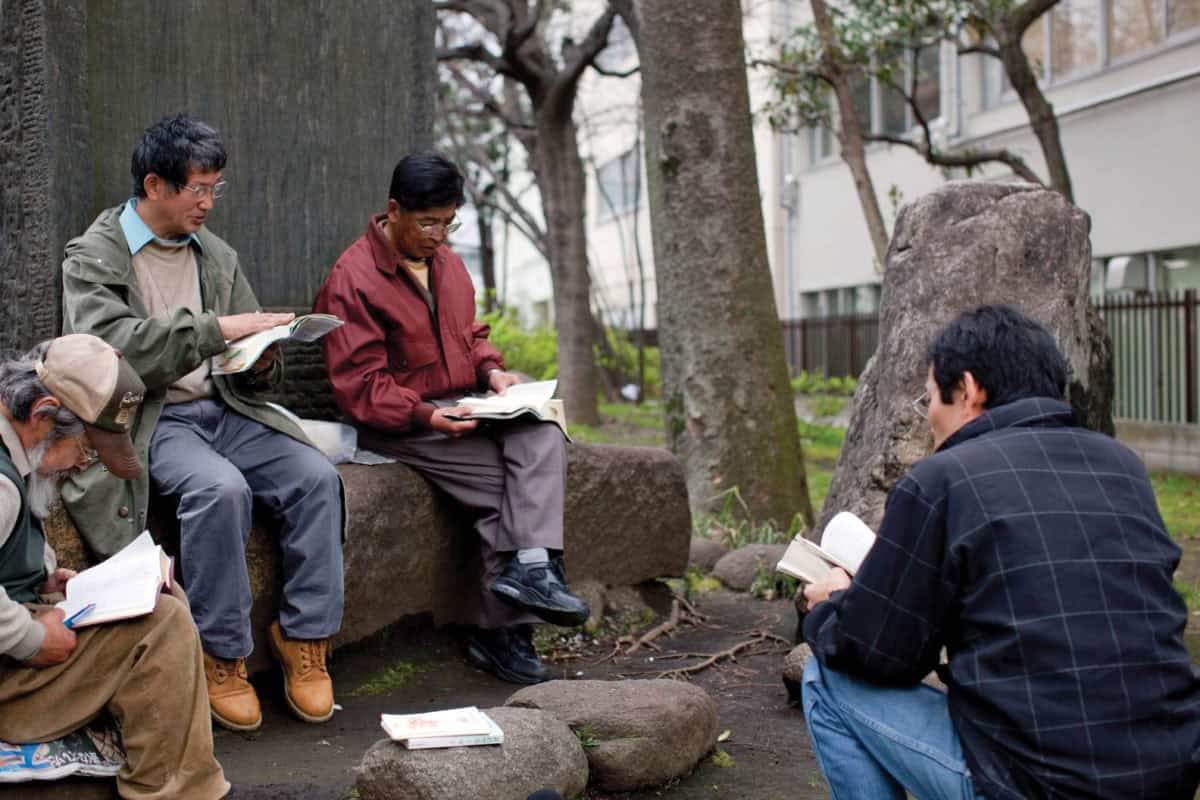
Summary: Matthew Elliott discusses how ending Bible poverty requires more than translating Scripture into every local language. Drawing on research from Africa, he argues that most people read in national or educational languages and lack access to the Bible due to cost and distribution issues. Elliott calls for a research‑driven, transparent, sustainable approach that prioritizes Bible engagement, local publishing, effective distribution, and contextual discipleship.
By Matthew Elliott
Evangelicals are set to spend over a billion dollars to end Bible poverty by 2033. Bible poverty means people do not have access to God’s word in a language they can understand. This is what we can easily measure. Just as people need more than money to be lifted out of physical poverty, they need more than a copy of the Bible to be lifted out of Bible poverty. But having a Bible is an essential first step.
Once people have a Bible, or Bible portions, to interact with, we shift focus toward Bible engagement. This refers to people reading, listening to, studying, and applying Scripture to their lives. Our purpose in ending Bible poverty is to see that people are equipped to engage with the Bible. Life-transforming Bible engagement requires a Bible that people can understand in a language they understand well enough to process what they read naturally and fully. We can also measure how well people understand what they are reading.
My first trip to Africa was with my father as a teenager, in 1984. We visited major Christian book and Bible distribution ministries across West and East Africa. Apart from breaks for education, a year serving as PA to George Verwer, founder of Operation Mobilization (OM), and a first job after college, I have been visiting bookstores, Bible Societies, and literature ministries across Africa and around the world ever since. Everywhere I travel in Africa, I hear and observe heartbreaking stories of churches living in Bible poverty. Over the past decades, I have had deep conversations and developed joint projects with many leaders who share with me the goal of ending Bible poverty in their lifetimes.
Over the last decade, many of these friends at places like Wycliffe, Seed Company, Biblica, and numerous Bible societies have formed a consortium that works to solve Bible poverty. In their own words: “IllumiNations is an alliance of Bible translation agencies and resource partners working together to eradicate Bible poverty.”[i] According to Every Tribe Every Nation (ETEN), the aim is for “ALL people to gain access to God’s Word in a language they can clearly understand by 2033.”[ii] This alliance includes the major Bible translation agencies. At about $1.2 million per language, hundreds of millions are being spent each year on this effort, with possibly several billion remaining to be committed by 2033. I calculated this sum by multiplying the number of Bibles remaining to translate by the cost per Bible.[iii]
Oasis International, my organization, works in Bible publishing and distribution, not Bible translation. I am an observer from outside this movement. The question I have been thinking about for over a decade now is very simple. Will meeting Bible translation goals actually end Bible poverty?
Translating the Bible into local languages has played a significant role in fulfilling the Great Commission. Some remarkable successes include providing access to God’s Word across every continent. Faithful Bible translators who live among and love people who had never heard the gospel have had an incredible impact. Interestingly, as Bible translation accelerates with the help of digital tools, becoming more efficient and faster, this may also distance translators from the people.
However, the growing reality is that billions of people are now educated in a language that their grandparents did not read or even speak. Many are more proficient and more comfortable reading a language they do not speak at the local market to buy a yam or mango.[iv] Nation-states promote commerce and national unity by having a national language of education. This is greatly enhanced by media and social media being ubiquitous. To further this point, those under 30 inhabit a global youth culture where most communicate in one of the top 20 online languages, accounting for as much as 90% of digital communication.[v]
For our purposes, this means that many, if not most, new Bible translations will be the only complete large-scale educational/religious texts in that language. If people feel most comfortable reading in a national language in school and on their phone, will they be reading their Bible in a “mother tongue?” Will translating the Bible into a language that will never become a major reading language help end Bible poverty? Maybe, maybe not; it depends on the local context and language use patterns. We need research that examines each language group individually to determine the best approach. Further, I fear that having a Bible in a heart language means very little if those Bibles are not read, studied, and preached from. Bible poverty ends when a person has access to a Bible they understand and use, in whatever form that takes. We must prioritize the people’s use of language, not our own Western-style checklist for completion. Sometimes it seems as if we believe that once every living language has a Bible translation, Jesus will return. Although we might not say this out loud, this idea does seem to underlie how we behave and spend our resources.
This theological bias may be part of the reason we have not pursued the research needed to make informed choices. The Bible translation movement tracks language groups without a Bible translation. This information is not correlated with a group’s bilingual status or the language of education.
Let me illustrate. Africa is known as the most multilingual continent in the world, and most Africans speak multiple languages.[vi] Today, Harvard University’s African Language Program’s webpage claims, “over 2,000 languages” are spoken in Africa, making it home to “nearly one-third of the world’s languages.”[vii] However, data shows that most Africans are reading and being educated in just three main languages of education – English, French, and Portuguese. For about 20 years, we have been tracking, correlating, and updating data from several sources, including The World Factbook, UN data, and Operation World. English has 350 million or more readers, French over 200 million and Portuguese 35 million in Africa. Of these, we estimate a minimum of 400 million to be Christian.[viii]
My favorite question to ask Africans in recent years has been: “Do your kids speak to their grandparents in their mother tongue?” After asking this question for years, I have yet to hear an unqualified “yes.” By asking questions, working on Bible distribution projects, and directly observing the shift toward English and French in media and education across Africa, we (Dr. Sunday Agang, Dr. Danny McCain, and I) concluded that our experience called for actual research. We initiated a research project to examine the languages used in churches and the personal life of Christians in Plateau State, Nigeria, which eventually collected over 124,000 data points from 81 churches. Data was collected by graduate students from ECWA Theological Seminary, Jos (JETS) with assistance from the University of Jos under the supervision of Dr. Sunday and Dr. McCain. Dr. McCain also supervised the African portion of the Pentecostal and Charismatic Research Initiative for the USC Center for Religion and Civic Culture, funded by the Templeton Foundation.
We hypothesized from anecdotal and qualitative evidence that change was occurring. Churches in Jos Nigeria that used to have services in Hausa, now worship in English. Students that come to university no longer read Hausa as much as they did a decade ago. As social media, video, and cell phone use increase, the trend toward reading and media in English seems to be accelerating. The research results confirmed these hypotheses. Here are some highlights: 69% of 81 churches conduct services in English or in English and Hausa. The remaining churches conduct services in Hausa. Only 16.7% of churches read the Bible in Hausa in their services. Most of the remaining churches read it in English. Half of the churches surveyed were outside of the major Jos/Bukuru metropolis, and yet no church surveyed publicly reads the Bible in a local language. 88% of surveyed church attendees preferred to have their personal devotions in English, 9% in Hausa, and 3% in Yoruba and Igbo – the two dominant languages in southern Nigeria. Less than 1% read the Bible for personal benefit in a local indigenous language. Linguistic research projects in other areas of the world are arriving at the same conclusions.[ix]
Let’s move on to comprehension. Our comprehension surveys showed that over 60% of participants had good or excellent reading and listening skills in English. Less than 20% had poor skills. The results were reversed for local-language testing. Fewer than 25% understood a local language at a good or excellent level. Most had average to poor listening comprehension. Hausa was in the middle of these results.
In short, in Nigeria, we believe that the use of a national language in education and the media, along with factors such as tribal intermarriage and internal migration, is contributing to the increasing dominance of a few major languages. English is by far the most read and best understood language in Plateau State churches. These results have led us to plan a larger pan-African study, which is waiting for funding.
I made a basic comparison between our research and the Bible poverty data available at Progress Bible,[x] the database that tracks the progress of Bible translation across agencies. When I compared the map from our survey with the map at Progress Bible, I identified 32 languages in the survey area that have “little or no Scripture.”[xi] This seems to suggest a need for Bible translation to end Bible poverty in that area. However, our survey respondents mainly read and speak English or Hausa.
A more effective strategy would be to shift our attention from translating the Bible to a flexible, research-based approach. After all, Paul proclaimed the gospel in the language of international trade – Greek. Similarly, the New Testament was written in that language.
I believe clear evidence shows that most Bible poverty in Africa occurs in languages that already have a good quality, updated Bible translation. First, there is the number of Bibles actually printed and distributed. Taking into account that physical Bibles wear out, that amounts to somewhere between 150 million and 200 million Bibles being on the continent, for 700 million Christians. If the total population of Africa is 1.26 billion, this means about 500 million Christians and another 500 million non-Christians do not have access to a physical Bible.
In contrast, the translation movements’ data on how many people are in language groups that are without a Bible translation shows that about 140 million people in Africa are without a Bible or New Testament.[xii] However, our research thus far indicates that, in Africa, almost every reader is bilingual and many, if not most, prefer to read in their language of education. Only 0.5–1% preferred to read in their local language. This is equivalent to 126 million or less of Africa’s total population of 1.26 billion. This means, at the very most, 126 million do not have Bibles because the Bible is not in a language they read. But, one billion do not have a Bible due to issues of distribution and affordability, with 500 million of these being Christians.
Although my expertise is specific to Africa, whenever I attend an international publishing gathering, I ask questions and hear similar thoughts from around the world. For Spanish in the Americas, for Russian in the former USSR, for Mandarin in China, the stories are much the same as what we see in Africa. In fact, I began asking these questions a decade ago, thinking Africa, due to its colonial past, would be different. Instead, I have never had a conversation without the other person nodding their head and saying, “Yes, that is exactly what we are seeing in Mexico,” or a similar comment from another country.
If my conclusions are correct, in contrast to the task of translation, our main challenges involve solving distribution issues, providing Bible access community by community, and addressing concerns about affordability and sustainability. Oasis has shipped commercial quantities of Bibles to 40 or so African countries over the last 18 months. I am not sure any other single organization (national Bible Societies are each separate) could claim that kind of reach. Our African staff deal with logistics issues every single day in multiple countries. I am fully confident, having been immersed in this reality as a vocation since 1995, that there is a lack of sustainable supply chains for Bibles in Africa. This makes the Bible unaffordable and unavailable for many. Very few organizations are working to solve this problem, and, compared to Bible translation, very little is being spent.
I suggest a new approach to solving Bible poverty with four pillars: research, transparency, sustainability, and contextual discipleship.
- Research-based: Bible translation research has historically focused on identifying living local languages that require a Bible. In today’s global context, research should be fully comprehensive, particularly around local education, bilingual reading, and reading comprehension. Before work proceeds on translating the Bible, we must know which language the schools teach, what percentage of those speaking that language are under 30, and whether there are any other books in the proposed language of translation. It is important to determine whether the people speaking that language have a reading culture in that language. That is, is there a reading audience for the translation? This is the most crucial data for making choices about Bible portion translation, oral Bibles, and how best to bring the Bible to an area. Unfortunately, these are not the questions being asked.
- Full transparency: Our research in Nigeria shows that we cannot assume that the presence of unreached peoples in an area implies a need for a new translation of the Bible to fulfil the Great Commission. Bible poverty does not always equal not having a Bible translation in a local language. For each language, donors should be given the full story. This includes details about reading languages, the condition of the church in the area, and whether youth are being educated in a language with an available Bible translation.
- Sustainability: We should concentrate on the sustainability of the publishing model, overcoming distribution barriers, building local systems, and increasing the availability of Bibles. Where Christian publishing is healthy, Bibles are readily available. Developing a sustainable publishing and business model is often overlooked but is essential to finding lasting solutions. Translation is only essential if a Bible does not exist in a language where the population is not bilingual and where younger members are not being taught in a language with a Bible translation. Our priorities and spending are often the wrong way around. Additionally, before investing in a mass Bible distribution project, we should carefully consider the possible implications of creating toxic charity. This occurs when large quantities of donated Bibles harm local infrastructure needed to serve the community long after the project ends. Often, an approach that invests in building local infrastructure and local publishing would have a much greater impact than a major “free” Bible project.
- Prioritizing investing in contextual discipleship: This point may be less obvious. In our context, community members in Africa are best served by discipleship resources that apply the Bible to their own contexts and cultures. These can be in the dominant educational language. A newly evangelized people group is discipled as they correctly apply God’s word to their time and place – this is the actual transformative work of the Bible. Africans are doing an outstanding job of reaching the unreached across their continent. The most effective way to accomplish the Great Commission and prioritize evangelism in many contexts will be to equip evangelists with contextual study Bibles, Bible commentaries, and Bible resources in their primary reading language.
Bible poverty will be addressed when Bibles are accessible and affordable in each community, in the languages people use at school, on their phones, and in their churches. In many areas, older generations may need access to oral Scripture in their local language. My call is for a research-informed, locally responsive, balanced approach to ending Bible poverty.
In almost every conversation on this subject, the first question raised is, “What about digital Bibles, isn’t that a solution to Bible poverty?” Hearing that comment is like clockwork; I can assume it is coming. Digital Bibles are wonderful. I use mine weekly, especially to read the original Greek text in church. They are a valuable and important way to increase access to the Bible. However, we need to note that access to a digital Bible does not necessarily lead to deep Bible engagement. Every person should have the chance to be alone with only a paper Bible, reading deeply the story of God’s love for them. An investment in digital is not enough to end Bible poverty. In fact, the same pillars of research, transparency, sustainability, and contextual discipleship are equally important for developing digital Bible products.
Re-thinking Priorities
The cost of translation averages $35 per verse. As there are 32 languages without a Bible in our survey region, it would cost $34,834,240 to complete their translation from start to finish. But, based on our research, this $35 million investment would address significantly less than 5% of Bible poverty in this region.
As many as a million youth attend school in the survey region. Most Christian students attend Bible class or Bible club in English – even in public schools! However, most do not have a Bible. What is the right solution for ending Bible poverty in Plateau State, Nigeria? I believe the answer is clear. We should ensure that every child in a Bible study group has access to a Bible in English or Hausa, available for about $5. In my experience, churches and teachers can even work to raise money to equip their youth. Church members should be able to buy a sustainably priced, durable Bible in their area. Bible portions in less widely used languages could be used for targeted outreach. This approach would be much more cost-effective and impactful than translating the remaining languages. Any new translation projects should be chosen based on careful research.
It is necessary to prioritize building local, sustainable systems for distributing Bibles and discipleship materials. Church growth, and with this the need for Bibles, is far too fast to rely on donor-centric Western Bible agency models. These will always depend on ongoing charitable donations. Digital distribution is only part of the solution. It is possible to achieve much greater progress in ending Bible poverty with fewer resources than we can with current priorities. Let me illustrate.
A few years ago, I sat at the headquarters of a Bible translation agency with the head of publishing, asking questions. The conversation went something like this.
“So, you are telling me that you don’t know if your translations are still in print?”
“Yes.”
“So, you don’t know how many have actually gone to people and how many are still in a warehouse?”
“Correct.”
“So, you don’t know where the films are and if they can be printed again?”
“We don’t.”
As a Bible publisher, this was a very discouraging conversation, and I have thought about it numerous times since. I am aware that with the creation of the Digital Bible Library and other efforts, things have improved. But here is the point: the belief that translating the Bible was the primary task needed to fulfill the Great Commission colored everything else. Distribution, warehousing, long-term availability, and the creation of a local economic engine were low priorities. Many translation projects have been completed, but Bibles were no longer available a few years later.
Our aim in ending Bible poverty is not to check a box indicating each and every language has a Bible translation. Instead, it is to ensure that every person can find and purchase God’s Word in a language they clearly understand and interact with naturally. If they cannot afford a Bible or, as a non-Christian, would not purchase one, let’s make sure systems are in place to give away Bibles. At the same time, let’s guard against charity that harms market mechanisms (thereby making Bible poverty worse). Eradicating Bible poverty can best be achieved by ensuring people can access Bibles in languages used in national education, digital communication, and commerce through sustainable, locally based publishing and distribution systems. To do this we need to research language use in local contexts, be transparent about what we learn and are doing, and prioritize discipleship resources that apply the Bible within local contexts and cultures.
My long-time friend and co-worker in this research, Sunday Agang, grew up through the changing linguistic realities in Nigeria, traversing into a new English-centric reality from the language of Sholio or Moro’a from Southern Kaduna, Nigeria. His analysis provides a fitting end to our discussion.
The goal of translating the Bible into indigenous languages is undeniably healthy and historically transformative. It affirms cultural identity, preserves linguistic heritage, and embodies the incarnational principle of the gospel entering local contexts. However, much of this translation work was undertaken without sufficient anticipation of the rapid rise and dominance of colonial, commercial, and officially sanctioned languages. In many contexts, they function as the language of upward mobility, education, governance, commerce, and digital engagement. Thus, while indigenous translation remains deeply valuable, it must now be reassessed in light of contemporary linguistic realities. This does not negate the importance of indigenous languages. Rather, it calls for a strategic reassessment. A dual approach may be required—one that preserves and honors indigenous languages while also recognizing the growing dominance of official and trade languages. Ending Bible poverty, therefore, is not merely a translation project; it is a strategic engagement with literacy patterns, educational systems, economic realities, and generational language shifts.
AI Declaration
AI tools were used to evaluate clarity, grammar, and punctuation. They were not used to create content.
[i] “About,” illumiNations, https://illuminations.bible/about/.
[ii] Every Tribe, Every Nation, https://eten.bible. Note that ETEN and IllumiNations are the same organization, using different names in different contexts.
[iii] Warren Cole Smith, “Just how broken is the Bible translation industry?” MinistryWatch: Empowering Donors to Christian Ministries (blog), September 21, 2021, https://ministrywatch.com/just-how-broken-is-the-bible-translation-industry/.
[iv] Gary F. Simons, “Two Centuries of Spreading Language Loss,” Proceedings of the Linguistic Society of America 4, no.1 (2019): 27:1–12. https://doi.org/10.3765/plsa.v4i1.4532.
[v] VerboLabs, “Global Internet Trends: Top Languages & Users,”August 8, 2022, https://www.verbolabs.com/internet-users-by-languages-worldwide/.
[vi] Translators Associations Africa, “Africa: The Most Multilingual Continent in the World Has Few Translators Associations,” https://lexis.pro/news/africa/africa-the-most-multilingual-continent-in-the-world-has-few-translators-associations-1398/.
[vii] Harvard University Center for African Studies, “African Language Program,” https://africa.harvard.edu/african-language-program.
[viii] At Oasis we have worked hard to try to understand reading languages and bilingualism in Africa. It is difficult to find statistics on literacy by language in bilingual contexts. I have verified our research methods and the difficulties of finding bilingual data with experts such as Dr. Todd Johnson, editor of the World Christian Encyclopedia and Dr. David Eberhard, editor of Ethnologue. These three languages are particularly dominant in Sub-Saharan Africa, although English is prominent in Egypt and French is equally important in Algeria and Morocco. There are also notable exceptions, such as Tanzania that choose Swahili as a national language at independence.
[ix] E.g., Stan Anonby, David M. Eberhard, and Tiar Adam Simanjuntak, “The Sequencing of Local Language & National Language Translations: Why Vernacular Scriptures Are Not Being Used – A Pilot Study Focused on Sulawesi,” Journal of Language, Culture, and Religion 6, no. 2 (2025), https://jlcr.diu.edu/article/145157-the-sequencing-of-local-language-national-language-translations-why-vernacular-scriptures-are-not-being-used-a-pilot-study-focused-on-sulawesi.
[x] ProgressBible, https://progress.bible/.
[xi] ProgressBible, https://progress.bible. Note, screening and a log in is required due to the dynamic of working in countries without religious freedom.
[xii] MissioNexus & ProgressBible, https://missio-graphics.s3.us-west-2.amazonaws.com/Volume+10/Bible+Translation+2024.jpg

Dr. Matthew Elliot has led Oasis International, satisfying Africa’s thirst for God’s Word, for over two decades and is the publisher of the ground-breaking Africa Study Bible. He has a BA in Economics and MA in New Testament Studies from Wheaton College, and a MTh in New Testament and PhD in New Testament from the University of Aberdeen, and was ordained at College Church in Wheaton, Illinois. He was also privileged to spend a year as “gopher” and PA to George Verwer, founder of OM. He is the author of Faithful Feelings: Rethinking Emotion in the New Testament (InterVarsity UK/Kregel) and Feel (Tyndale House). Matthew and his wife, Laura, have three children and live in the Blue Ridge Mountains of North Georgia.
EMQ, Volume 62, Issue 3. Copyright © 2026 by Missio Nexus. All rights reserved. Not to be reproduced or copied in any form without written permission from Missio Nexus. Email: [email protected].