Rethinking Generosity
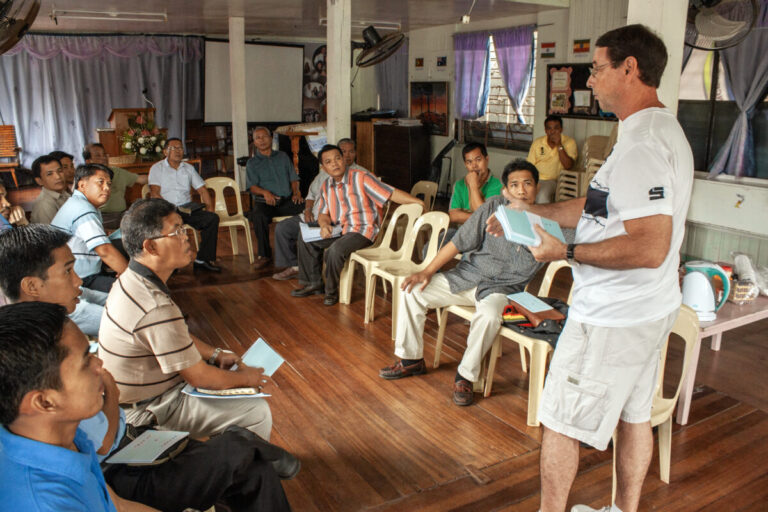
By Jim Harries | Sometimes, as missionaries, we are not aware of the ways our generosity unintentionally causes problems. Often, providing material resources is associated with power. This disrupts local relationships, even when nothing is said. Sacred power is an alternative to the power associated with material generosity. Giving that focuses on emptying oneself rather than the gain of another reflects Jesus’ generosity. This sacrificial generosity equalizes missionary and local. Its cost is far greater than money and material resources.
EMQ » Oct – Dec 2025 » Volume 61 Issue 4
Summary: Sometimes, as missionaries, we are not aware of the ways our generosity unintentionally causes problems. Often, providing material resources is associated with power. This disrupts local relationships, even when nothing is said. Sacred power is an alternative to the power associated with material generosity. Giving that focuses on emptying oneself rather than the gain of another reflects Jesus’ generosity. This sacrificial generosity equalizes missionary and local. Its cost is far greater than money and material resources.
By Jim Harries
I am reminded of an occasion many years ago, riding the train from Kisumu in Kenya to Nairobi. When we stopped at a station, somewhere deep in a rural area, three boys frolicked outside my window. While grinning and laughing, their actions made it very clear they wanted me to know they were hungry. I had a plastic container with me, full of biscuits. “Jim you are so selfish,” I said to myself. I threw the plastic container out of the window to the boys. Instantly, the scene changed. The joyous frolicking and display of their hunger disappeared. Instead, the boys fought for possession of those few biscuits.
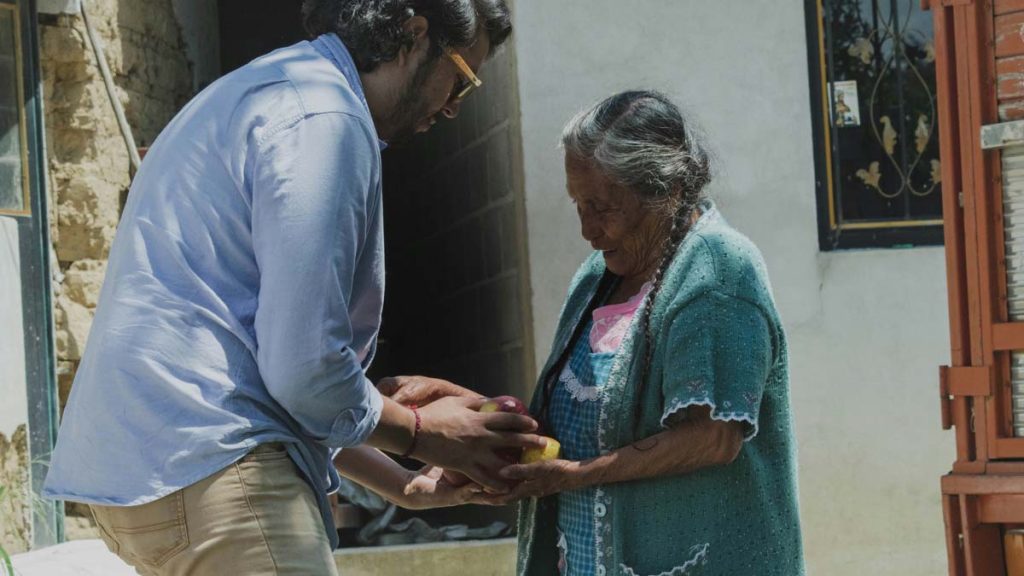
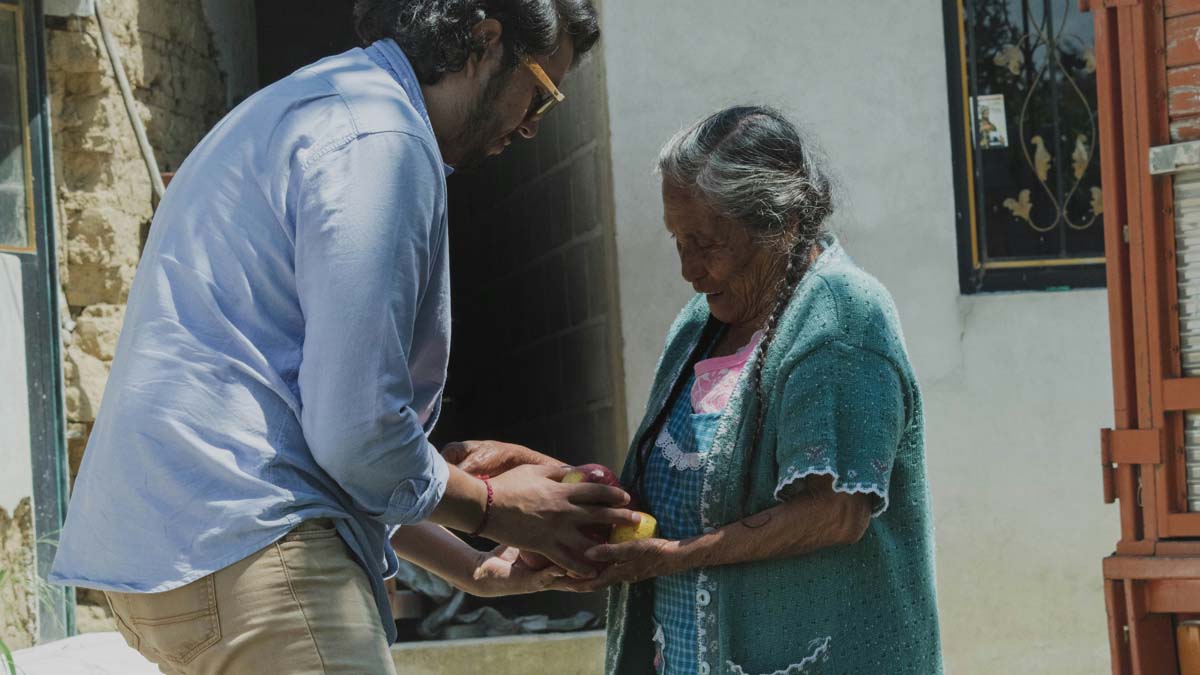
So often, when meeting people who have fewer things (poverty), the solution considered is to give things to them. Yet, sometimes, people don’t notice their poverty until wealthier people show up. Occasionally, when the need persists and seems increasingly complicated (from the givers’ perspectives), the gifts seem to fall into a never-ending hole. For the receivers, the giving-machinery can itself become the way forward and up in life. Sadly, some people may preserve an appearance of poverty to gain an income.
People with resources dominate in these situations. Generosity can then become a new form of colonialism. Some Westerners consider that true gifts are entirely free, meaning they require no payment in return. But most cross-cultural missionary work will be with people who see a need to reciprocate gifts in some way. Thus, generosity can result in pressure towards reciprocity. This can result in unintentional influence by missionaries towards what they think is best.
Ways of Being Generous
Most Christians promote generosity. This is admirable. A list of biblical verses that advocate generosity can easily be found with a Google search.[i] How one ought to be generous, exactly to whom, and in what way, can be difficult to work out. Below is a scenario that outlines alternative responses to a challenge.
A missionary or NGO worker has an indigenous friend who is sick. The friend lives 5 miles away. The only way to get to them is by walking. The NGO worker strongly suspects the friend has malaria and has not yet been treated for it. There are two options:
- Send someone to the friend to give them malaria medicine
- Walk five miles each way to visit and encourage the friend, without medicine
The most common response is to send someone with the medicine. I believe we need to take the second option more seriously.
There are two types of generosity. First, we can give material resources that money can buy. These are of many kinds. Examples include a gift of flowers, money itself, a device, some food or drink, clothing, books, advanced education, buildings, vehicles, phones, computers, soap, wives (in some cultures), hairdos, books, medicines, medical procedures such as operations and physiotherapy. The second is generosity with things that money cannot buy. These are mostly things that take significant time to accomplish. They include things like giving one’s time to lend a listening ear, to show empathy, to provide companionship, to express appreciation or interest in someone, or to learn someone’s language. I suggest we prioritize this second kind of generosity.
Gifts can also be categorized in another way:
- gifts that do not cost at all or cost only a little to the giver
- gifts that cost much, resulting in a serious lack or shortfall of something important for the giver
Being generous with one’s small salary is different from being generous with funds one receives to give away. A good example of the latter is a donation received from a fundraiser. Someone known for generosity, say to the poor, may receive gifts from others to pass on. The gift given by this generous person may cost them very little. Many of today’s missionaries and development workers receive funds from others in order to pass them on. Their giving doesn’t cost them personally. Rather, giving is simply part of their role, their job.
A problem with giving resources received with little cost to oneself, is the way this generosity results in power over others. Many NGOs, including missionary organizations, suffer from an internal contradiction. On one side, they set out to be humble, attentive to their target communities, listening, empathetic, not imposing, engaging only those who choose to interact with them. On the other side, using resources bought with money that costs the missionaries little, means they inadvertently become the boss in charge, the dominating voice to which everyone becomes attentive.
The Problem of Power
Lukes provides a very useful analysis of power.[ii] He explains that it can be expressed in three ways:
- Through direct conflict, where the powerful person gets their own way
- A powerful person alters things through continuing influence or authority, without any direct confrontation
- The powerful person does not appear to act in any visible way; Yet, through custom, because of no alternatives, people highly value what they do, people enact their preference
Many popular analyses of power tend towards consideration of conflict and influence. These types of power can be expressed by shouting, ordering, commanding, overseeing, dictating, writing the rules of engagement, and overtly influencing decisions through allocation of finance. Yet, according to Lukes, an alternative source of power and influence needs no raised voice, or even any voice at all. People simply make the will of the powerful person happen. Others follow what they know his or her wishes to be, no questions asked. There is implicit compliance. It is just how things are done.
Western missionaries and aid workers may not be vocal in Majority World contexts. They may neither shout nor command nor even speak at all. They may not seem to pressure, or even influence. Yet, by default, people prioritize their agenda. They may seem to be boosting something that indigenous people would be doing anyway. Yet, they may be almost completely responsible for what is going on.
Western missionaries may be influential before they even open their mouths or tell anything to anyone. Local people anticipate types of behavior they know or assume that Western missionaries will engage with. That often includes anticipation of much financial generosity. This orients them to wanting to agree with Westerners.
These days, many missionaries heading to the Majority World want to avoid acting as White saviors. White Saviors is a term used for White people who came to help but whose help became the source of local people’s problems. This discourse, of well-meaning White oppressors dominating others in destructive ways, is widespread. It is often labeled neo-colonialism. Missionaries defending themselves against accusations of being neo-colonial sometimes think local people are themselves responsible for their predicaments. Another alternative is to blame the system, considering structural factors to be responsible for people’s poverty.[iii]
Unfortunately, not seeing one’s own fault, while bracketing the possibility that local people are contributing to their own problems, puts the focus on structures causing problems. This keeps the initiative with outsiders, as they have to dismantle the oppressive structures!
Generous and thoughtful White Western people may make well-intended efforts at valuing the local people. But considering the plight of local people to be due to hegemonic structures set up through the misguided actions of prior generations of Westerners has consequences. It may be assumed the best way to help indigenous people is to use one’s resources to counter the oppressive structures. This is often done without significant contact with or understanding of local people. Outsiders still appear to think they are required to save local people. Consequently, indigenous people get trapped into being beholden to foreigners for all significant initiatives. As foreigners work to undo the oppressive structures set up by their forefathers, they, again, quash indigenous initiative and encourage outside dependency.
There are many ways in which poorly thought-through generosity can do damage. These include damage to relationships when recipients compete for funds from an outside donor. Missionaries’ generosity to pastors may make them vulnerable to accusations of embezzling funds. Similarly, foreign gifts to local individuals can cause envy among non-recipients. This can damage relationships on all sides. If a missionary’s giving exceeds that of a local donor, this may decrease that person’s standing in the community. People who had previously aspired to local prosperity become dissatisfied in the face of foreign wealth. If foreign support stops, ministries can collapse. And where foreign initiatives are generously funded, people will often adopt them regardless of their benefit, sometimes causing better local initiatives to fail for want of support.
Given how “generous” tends to be defined in present-day mission practice, some missionaries should not be generous to those they serve. They need to utilize an alternative source of power. We could call this “sacred power.” “Sacred” relates to “sacrifice.” This is the self-giving power of Christ on the cross. It is activated by missionaries giving themselves for others.
What Does Biblical Generosity Look Like?
The Gospels make little reference to donor funds. Jesus did not raise money, although he and his disciples seemed to have some collective resources. For example, Judas was keeping a collective money bag (John 12:6). Jesus healed many people. His healing did not require money to buy medicine, hospital admission, or even the services of priests. Certain women took personal responsibility by providing for Jesus and his disciples (Luke 8:2–3). One assumes they did so by drawing on their private resources, out of their own means, rather than from a collective kitty (Luke 8:3, NIV). There is little indication that Jesus was in favor of people solving their problems using outside donor funds.
Beyond the Gospels, Paul raised funds for the poor in Jerusalem. Georgi asserts the label, “the poor” was given to people who chose to devote themselves to study of God’s word rather than engaging in business or some more profitable profession.[iv] The equivalent to funds for the poor in present-day expression is people supporting their pastor.
In the Old Testament, God directed the people’s generosity to the sacrificial system. They gave by offering animals (Leviticus 1–7) and to maintain Temple buildings (2 Kings 12:1–16).
Feeding the 5,000 is a good illustration of Jesus’ approach to generosity. Jesus started with very few resources: five small barley loaves and two small fish (John 6:9). Those few resources were multiplied as Jesus gave thanks (John 6:11). People later wanting to make Jesus their king, a status that he refused, illustrates the challenge of being generous and how it can be misinterpreted (John 6:15). The true bread, we discover later in chapter 6, is Jesus himself (John 6:33, 35, 48, 51, 53, 58). Jesus pointed us to being generous with giving that costs. It was to cost him his life. His major act of giving was not out of any kind of surplus. Jesus did not use resources bought using money. Instead, he gave his time, even though he knew his life was soon to be cut short by the crucifixion. In verse 60 we find that the disciples found Jesus’ teaching difficult. Similarly, today, it is easier to think of help for the poor as generous material provision than to give oneself like Jesus modeled.
What Sacred Power Could Look Like
Sacrificial generosity focuses on what one loses oneself, not what the other gains. Its supreme expression is to die for another (John 15:3). This was Jesus’ style of self-giving. It provided no personal benefit; no wells dug, no church buildings erected. He didn’t even baptize people (John 4:1). There was no direct increase in economic efficiency. Yet, what Jesus did cuts to our hearts and causes us to believe in him. Primarily, missionaries need to die to themselves. They give their lives, not property, money, education, or even good exegetical biblical method.
Various means can be used to avoid issues. One is for missionaries to work under local power structures. Decisions are then made by local leaders and missionaries simply follow their instructions. However, this only works if missionaries are not responsible for fundraising. Although, having a missionary in a project can authenticate what is happening for foreign donors. The donors, in this instance, engage directly with the local leaders.
Local control of mission efforts protects individual missionaries from the accusation that they are usurping power that rightfully belongs to locals. Missionaries under local leadership, who are simply following orders, thus work on the same level as locals.
Sacred power involves vulnerability as well as humility. Humility is an important virtue for missionaries. The problem with humility as a concept, is that someone can appear to be humble while they wield traditional power. The way forward means having no more resources available in engagement with locals than those one needs to keep oneself. In other words, any generosity practiced by a missionary will require a reduction in their basic living standard. For example, the sending agency may have allocated sufficient budget for missionaries to buy food in a quality supermarket. However, because those missionaries gave funds sacrificially to others, they must instead buy their supplies from the local market. The more a missionary is generous, the more they must lower their standard of living. This requires self-imposing restraint on what one does.[v]
Conclusion
I do not mean to suggest that material generosity is always wrong, or that Jesus or the Bible do not promote it at all. However, I do promote generosity that is not material-resource-based. Instead of an over-concentration on resource generosity, we should focus on Jesus’ style of self-giving.
A widespread principle adopted by NGOs is that in their work with poor communities they should “do no harm.” This is a basic ethical principle for human interaction.[vi] But many NGOs remain oblivious to ways in which outside resources often do significant harm. They can negatively affect the stability of relationships, local markets, would-be entrepreneurs, and prospects for indigenously powered development.[vii]
Being materially generous often is associated with power. This power can be abused. We need to be careful our material generosity does not have a negative impact. In contrast, we can give ourselves sacrificially. This article draws attention to sacrificial generosity. For example, in the scenario of suspecting that a friend has malaria from the beginning of this article, should the priority be to provide medicine or to take the trouble to visit them? My suggestion is to prioritize visiting them – a gift of an action that costs time.
[i] For example, https://www.biblestudytools.com/topical-verses/bible-verses-about-generosity/.
[ii] Steven Lukes, Power: A Radical View (Macmillan, 1974).
[iii] Emma Kowal, Hayley Franklin, & Yin Paradies, “Towards Reflexive Anti-racism,” in: Directions and Intersections: proceedings of the 2011 Australian critical race and whiteness studies association and indigenous studies research network joint conference, 133–152 (Australian Critical Race and Whiteness Association, December 2011), 327.
[iv] Georgi, Dieter, Remembering the Poor: The History of Paul’s Collection for Jerusalem (Abingdon Press, 1992).
[v] Jim Harries, “Self-Imposed Strictures and the Role of Western Missionaries in Cross-Cultural Mission to Africa.” Missio Dei 6, no. 2 (2015), https://missiodeijournal.com/issues/md-6-2/authors/md-6-2-harries.
[vi] Richard Hugman, Eileen Pittaway, and Linda Bartolomei, “When ‘Do No Harm’ Is Not Enough: The Ethics of Research with Refugees and Other Vulnerable Groups.” The British Journal of Social Work 41, no. 7 (2011): 1271–87.
[vii] Jim Harries, “The Immorality of Aid to the ‘Third World’ (Africa),” in Vulnerable Mission: Insights into Christian Mission to Africa from a Position of Vulnerability, ed. Jim Harries (William Carey Library, 2011), 23–40.

Jim Harries, PhD, born and raised in UK, has ministered, primarily in Bible teaching using the Luo and Swahili languages, in Africa since 1988. His orientation to working with indigenous churches and close identification with the Luo people of Kenya provides him with deep insights, that are reflected in more than 12 books, and 28 peer review articles that he has published since 2000.
EMQ, Volume 61, Issue 4. Copyright © 2025 by Missio Nexus. All rights reserved. Not to be reproduced or copied in any form without written permission from Missio Nexus. Email: [email protected].