Unsettling the Settled with Resettlement: A Story of Cross-Cultural Outreach to Afghan Refugees in a Chinese-Heritage Church
By Jackie J. Hwang | A Chinese-heritage church was challenged by cross-cultural outreach to Afghan refugees. The members of the church grew spiritually from navigating the challenges in this ministry. It was an opportunity for God to work in and through them in cross-cultural diaspora mission. Lessons learned in making culturally appropriate adjustments and investing in friendships led to spiritual conversations with the Afghan refugees.
EMQ » Jan – April 2026 » Volume 62 Issue 1
Summary: A Chinese-heritage church was challenged by cross-cultural outreach to Afghan refugees. The members of the church grew spiritually from navigating the challenges in this ministry. It was an opportunity for God to work in and through them in cross-cultural diaspora mission. Lessons learned in making culturally appropriate adjustments and investing in friendships led to spiritual conversations with the Afghan refugees.
By Jackie J. Hwang
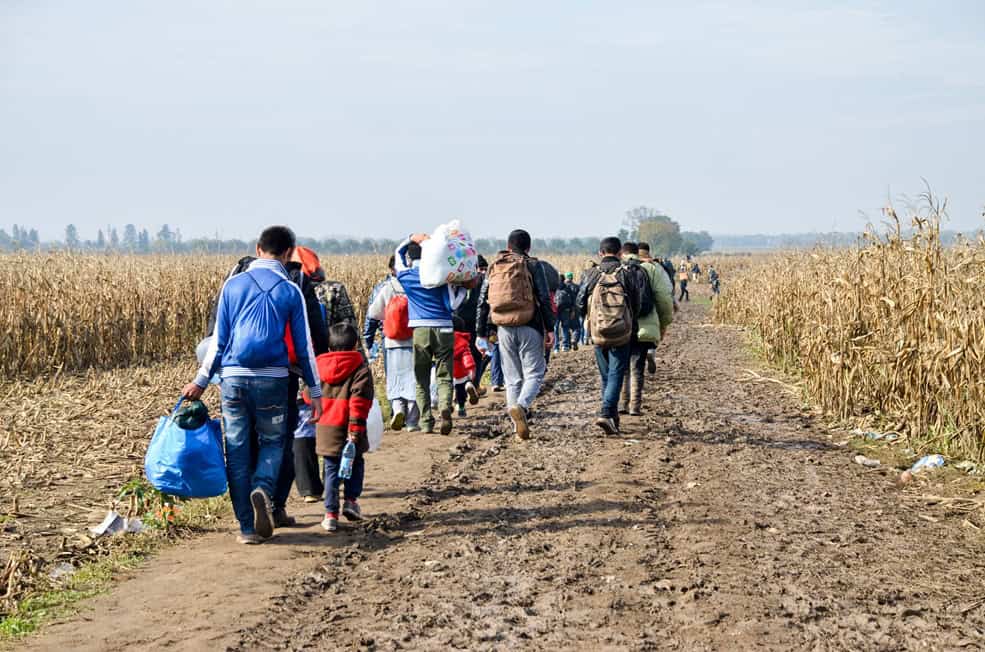
The rapid increase in human migration is a twenty-first century reality. This is shown in the first-ever World Migration Report in 2000, followed by eleven subsequent reports published since then.[i] These reports recognize that “[a] growing number of people no longer remain in their countries of birth or ethnic origin but migrate the world over in search of better opportunities or safety from persecution or violence.”[ii] The increase in migration and its complexities is, in many ways, also an increase in mission opportunities.
Migration of people has often been a conduit for God’s mission. The book of Acts tells how the first-century church multiplied because of migration—first in the gathering of diasporic Jews at Pentecost (2:5), then the scattering of believers after Stephen’s martyrdom (8:1–4), and the journeys of Paul (13–28) and Barnabas (13–15:39). History also offers ample examples of how missionary activities journeyed alongside human migration.[iii]
In the twenty-first century, the rapid increase in human migration has presented numerous mission opportunities both at home and abroad. Mission opportunities at home have gained attention in recent decades, expanding the earlier paradigm that conceived of mission activities as primarily abroad. It is therefore no accident that a Chinese immigrant to the US gave us the well-known volume, Diaspora Missiology,[iv] due to his keen awareness of the mission possibilities migration brings.
Though Enoch Wan’s Diaspora Missiology was published more than ten years ago, the reality remains that diaspora mission tends to be a peripheral ministry for most American churches. Mission abroad continues to attract more resources and attention. Even for churches with a high number of immigrants, diaspora mission activities are usually limited to those who share similar ethnic origins as the existing congregations. Despite this inertia, God’s spirit moves to create new mission opportunities and challenges Christian communities with breakthroughs. This is the story I wish to tell – unsettling the settled with resettlement.
Becoming Settled
This story begins with Living Water Evangelical Church (LWEC) in the suburbs of Chicago. LWEC is a typical Chinese-heritage church. At its inception, it was a Mandarin-speaking congregation consisting of ethnic-Chinese immigrants from mainland China, Taiwan, Hong Kong, and Southeast Asia. They migrated to the US for education and work opportunities. Some of them arrived in the US shortly after President Lyndon B. Johnson signed the Immigration and Nationality Act of 1965, granting Chinese new arrivals a pathway to US citizenship. Others came in later waves of migration. All of them adapted to their new country of citizenship by learning English, adjusting to the American way of life, and settling down as they bought homes and raised their families in the US.
The Mandarin congregation began meeting in a Chicago suburb in 2002. Some individuals were already Christians before they immigrated to the US, but the majority became Christians after arriving. Their shared experiences as immigrants and Christian converts brought them together. The church became both an ethnic- and faith-oriented support network.[v] Over the years, the church continued to grow in numbers and diversity. To pass on their faith to their children who were born and raised in the US, an English-language youth ministry was started. Later, an adult English congregation was also formed in the church. The presence of an English congregation and youth ministry attracted other Christians without a Chinese heritage, though Chinese Americans continued to make up the majority.
Although both the Mandarin and English congregations had an ethnic-Chinese majority and the main ministry focus was toward ethnic Chinese, some church members caught a vision for Muslim outreach through the influences of Chicago Chinese Christian Missions (CCCM)[vi] and AiMu (Love Muslims) Today International.[vii] These two Chinese mission organizations informed and sowed seeds for engaging Muslims with their prayer guides and exposure trips. This led to an openness for what would come next for LWEC.
Participating in the Resettlement of Refugees
The opportunity to put into action a vision for Muslim outreach became available when some church members connected with World Relief[viii] and Exodus World Service[ix] in the resettlement of two Afghan refugee families. The church members provided care packs for these families, visited the families in their homes regularly, and helped the families navigate life in the US. They slowly built relationships and trust with the refugee families.
When one of the Afghan refugee families expressed interest in learning more English, these church members invited the family to visit the church on Sunday afternoons so that more people could help them with English learning. The Afghan family accepted the invitation, which was a great encouragement to the church members. This opportunity also prompted these church members to recruit others from the church to join in ministering to this Afghan family.
The English-learning needs of the Afghan family were shared with both the Mandarin and English congregations, recognizing that members from the English congregation would be able to provide more help with English learning, and those from the Mandarin congregation would play a supporting role through prayers and logistical coordination. This opportunity not only brought more people from the church into cross-cultural connections with the Afghan family, but also brought together the two language congregations that have often operated independently of each other.
For members from both congregations, serving together in cross-cultural outreach was an occasion for bridging cultural and intergenerational barriers between the two congregations. In many ways, partnering together in outreach unsettled some established social patterns in the church. Those serving together recognized that this was also a process of growth for the church members.
Unsettling the Settled
For LWEC, involvement in helping Afghan refugee families in their resettlement is an unsettling experience. It challenged many cultural and social patterns typical of Chinese-heritage churches. However, because of a vision for engaging Muslims in cross-cultural ministry, those involved in this ministry were willing to navigate through these unsettling moments so as to participate in God’s mission. (I had the privilege of helping with this later phase of cross-cultural engagement with the Afghan family when my family lived in the Chicago suburbs during 2023–25.)
One of the cultural patterns we needed to overcome was an achievement-oriented approach to academics. In helping the school-age children and youth of the Afghan family learn English, we had to defer our ingrained expectations of academic success. Instead, we listened to the Afghan youth and discovered that they craved friendship over academic success. Thus, we learned that a desire for academic success was not a universal value. We adjusted our approach with more friendship-oriented activities to help them learn English. By investing in friendships, we were able to develop an awareness of our Christian witness to them that was more culturally sensitive.
Another cultural habit we needed to modify was in how we structured our ministry team. While a Confucian framework tended to order Chinese-heritage churches by giving more authority to the senior individuals in the church, the English-learning outreach required us to yield more responsibility to the younger members from the English congregation. Some of these were youth in high school and middle school. This is because they were the ones engaging the Afghan family in English learning. This meant the senior members of the ministry team gave more autonomy to the younger members in designing the activities to help the Afghan family learn English. At the same time, the senior members provided support through prayer and logistical coordination. They also encouraged and affirmed the younger members for their participation in this ministry. This form of leading from behind was an adjustment that allowed the team to cross cultural and intergenerational barriers within the church. In the beginning, both young and old were unused to this new reconfiguration. Over time, we could see that it encouraged a heart for mission in the younger members and showed the senior members a greater sense of God’s sovereignty in ministry.
When more responsibility and autonomy were given to the younger members, we did not want them to feel unsupported. One way we ensured there was adequate support was by building in a monthly check-in, which we called “Team Time.” The purposes of “Team Time” were threefold. First, it was a time for members of the ministry team to share the challenges and blessings they experienced while engaging the Afghan family. Second, it was a learning opportunity to provide the team with ongoing training for cross-cultural ministry. Lastly, it was a planning time so that the team members could prepare for how they would engage the Afghan family in the following weeks. Having monthly “Team Time” allowed our team to make timely adjustments in our ministry approach, maintain a channel of communication within the team, and keep the ministry grounded in relationships instead of tasks.
Sharing during “Team Time” was particularly instrumental in addressing frustrations we had when we did not see anticipated ministry progress with the Afghan family. Several members joined the ministry with the desire that they would have opportunities to communicate the gospel verbally. However, we soon discovered that verbal communication was an obstacle because the Afghan family had minimal comprehension of English, and we had minimal skills in Pashto, the Afghan family’s language. When we could have simple English conversations with the youth of the Afghan family, they were not interested in learning about the Christian faith. To address this frustration and disappointment, we used personal stories, diagrams, and an interactive activity to show that gospel engagement with Muslims would be a long-term investment.[x] We encouraged our team members not to feel their efforts were in vain when quick results were not visible.
Engaging in cross-cultural interactions with the Afghan family unsettled members of LWEC in many areas. However, it was in the process of learning how to be a Christian witness to the Afghan family that we also learned more about our ethnocentric tendencies and unrealistic expectations. We were challenged to change our habits and thoughts so we can be more effective conduits for God’s mission.
Closing Thoughts
Outreach to the Afghan refugee families gave LWEC valuable experiences in cross-cultural diaspora mission. This encounter caused us to examine our own cultural tendencies. It led us to adjust our expectations and allowed God to work through us while also working in us. Darrell Whiteman proposes that “every effective missionary must undergo two conversions.” By this, he means the “first conversion is our conversion to Christ as Lord of all our life.” The second is when God cleanses us from our ethnocentrism.[xi] For members of our Afghan outreach team, we experienced this “second conversion.” We became aware of our cultural tendencies and relinquished some of them for the sake of the gospel work. This transformation was particularly apparent through the sharing of the youth who participated in this ministry. Below are some of their reflections:
“I want to understand other cultures and know the challenges they face as refugees.”
“The language barrier and cultural differences between us [LWEC members and Afghan refugees] were challenging, so we tried to understand each other’s different perspectives.”
“I learned to have patience and an open attitude when I spend time with them.”
“I am happy to serve God, and it helped me become more interested in missions.”
It is safe to say that our team members grew spiritually in engaging with the Afghan family. God’s work in us was no less than his work through us.
In tandem with our growth toward cultural awareness, we also learned about the cost of friendship in cross-cultural ministry. Dana Robert wrote, “Friendship requires commitment both to Jesus Christ and to others unlike oneself, in concrete, specific, and long-term relationships.”[xii] While it took more than we anticipated to invest in friendship with the Afghan family, we saw a long-term relational commitment led to trust and openness for spiritual conversations. The opportunities for spiritual conversations often occurred when we did not anticipate them, and the openness for conversations was usually with those who had spent the most time building trust and friendships with the Afghan family. While we continued to communicate the gospel through our friendship and hope someday this family would know Jesus as their savior, we learned not to be discouraged by the long process. We trust in God’s timing and working in this family.
[i] International Organization for Migration, World Migration Report 2000, United Nations Publication (International Organization for Migration, 2000). Subsequent reports were published in 2003, 2005, 2008, 2010, 2011, 2013, 2015, 2018, 2020, 2022, and 2024. All are available on https://worldmigrationreport.iom.int/what-we-do/all-world-migration-reports.
[ii] International Organization for Migration, World Migration Report 2000, vii.
[iii] Andrew F. Walls, Crossing Cultural Frontiers: Studies in the History of World Christianity, ed. Mark R. Gornik (Orbis, 2017), 46–61; Jehu Hanciles, Migration and the Making of Global Christianity (Eerdmans, 2021).
[iv] Enoch Wan, ed., Diaspora Missiology: Theory, Methodology, and Practice, Second edition (Institute of Diaspora Studies of USA, Western Seminary, 2014).
[v] A helpful ethnographic study of Chinese immigrant Christian communities is Fenggang Yang, Chinese Christians in America: Conversion, Assimilation, and Adhesive Identities (Penn State University Press, 1999).
[vi] https://cccmforhim.org/. CCCM also regularly publishes Chinese-language articles on mission. LWEC’s Afghan outreach story can also be found in its July 2025 publication.
[vii] https://www.aimutoday.com/.
[viii] https://worldrelief.org/.
[ix] https://exodusworldservice.org/.
[x] Richard Y. Hibbert, “Negotiating Identity: Extending and Applying Alan Tippett’s Model of Conversion to Believers from Muslim and Hindu Backgrounds,” Missiology: An International Review 43, no. 1 (2015): 59–72.
[xi] Darrell L. Whiteman, Crossing Cultures with the Gospel: Anthropological Wisdom for Effective Christian Witness (Baker Academic, 2024), 1.
[xii] Dana L. Robert, Faithful Friendships: Embracing Diversity in Christian Community (Eerdmans, 2019), 18.
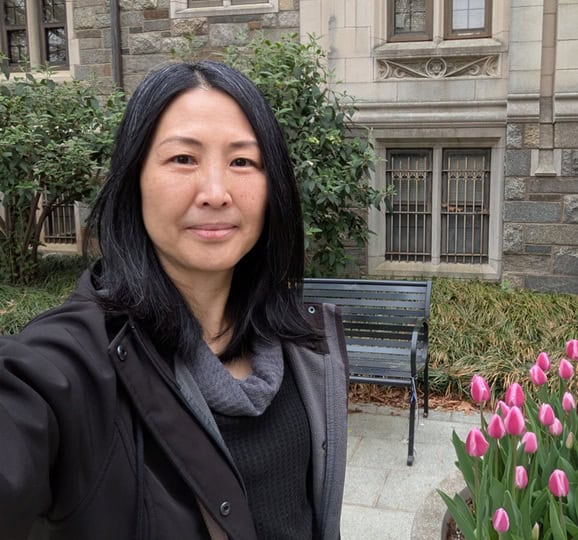
Jackie J. Hwang has been a missionary of OMF International since 2010, first in Singapore and most recently in the US, as the Intercultural Research and Training Coordinator. She was born in Taiwan, grew up in the US, and raised her children in Singapore. Her journeys informed her ministry and research interests in diasporic experiences. She is also a PhD candidate in World Christianity at the University of Edinburgh.
EMQ, Volume 62, Issue 1. Copyright © 2026 by Missio Nexus. All rights reserved. Not to be reproduced or copied in any form without written permission from Missio Nexus. Email: [email protected].