Work as Gospel Ministry
By Larry Sharp | Missionary visas are no longer granted for many countries today. At the same time, we are realizing that being a missionary is not limited to a spiritual professional. Just as God is a missionary God, all his people are called to share with him in his mission work. There is no sacred secular divide. Through sharing and living out the gospel in workplaces, Christians everywhere can fulfil the Creation Mandate, the Great Commandment, and the Great Commission.

EMQ » April – May 2026 » Volume 62 Issue 2

Summary: Missionary visas are no longer granted for many countries today. At the same time, we are realizing that being a missionary is not limited to a spiritual professional. Just as God is a missionary God, all his people are called to share with him in his mission work. There is no sacred secular divide. Through sharing and living out the gospel in workplaces, Christians everywhere can fulfil the Creation Mandate, the Great Commandment, and the Great Commission.
By Larry Sharp
My wife and I joined a mission agency in 1972, and we are still members. Twenty years ago, as an executive in the home office, I observed that God was working in dramatically new ways. He had to! Unlike the openness of the world after the Second World War, two-thirds of the world now lived in countries that do not grant missionary visas. Missionary work in most of these countries is forbidden.
We, along with other mission agencies, were challenged by the deportation of missionaries from many countries, as well as other restrictions. Certainly, that did not take God by surprise. We asked ourselves, “Is God beginning to work more often through the marketplace at home and abroad?” This led me in the direction of exploring work in relation to God’s great plan for the world and the role of every individual Jesus follower.
God continues to long for every human to worship Him. Certainly, times have changed, but there are also insights into God’s work that have impacted me in recent years. Here are some things I learned about bringing the gospel truth to the nations after I graduated from Bible College sixty years ago.
God, Work, and Mission
God showed himself to be a worker when he rested from work after creating the world (Genesis 1, 2). He gave Adam and Eve work to do in the garden (Genesis 1:29; 2:15). Work has dignity, sanctity, and intrinsic value. It is not a curse but a means to bless others and a God-provided means of wealth creation (Deuteronomy 8:18).
God intends for our work to create wealth. Mats Tunehag and others in 2017 were instrumental in developing the Wealth Creation Manifesto.[i] Exodus 31:1–6 clearly indicates that the filling of the Spirit of God is integrated with skilled workers and their craft. The apostle Paul links faith with work in I Corinthians 10:31, “… whatever you do, do it all for the glory of God.” Our work is meant to have God and our faith as central to it. Thus, faith is meant to be integrated with work.
Patrick Lai[ii] argues that the Hebrew word avodah is often translated in our English Bible as worship, but it is also translated as work and service. He states that in the mind of an ancient Israelite, the meanings were integrated. When a Jewish worker created something, whether a piece of jewelry, an altar for the tabernacle, or the wall to a city – all was done in worship to God.
The imago Dei is closely linked to Missio Dei. I knew we were made in the image of God, but I never thought of God’s mission in the world. I thought that God gave us a mission to take to the nations (Matthew 28:19-20), but not in the sense of God himself being on mission. Stetzer[iii] notes that Missio Dei is God-focused, and he is on a mission to glorify himself. It is what God is doing in the world. We are privileged to participate in God’s mission. This is different from what we were used to calling missions. Usually, missions is considered to be a particular calling to engage in cross-cultural ministry and is a small department in a church. That was never God’s intent. He desired that all of God’s people made in his image were privileged to be on mission with God everywhere they are.
This means our understanding of God’s mission must move from something churches do for the sake of God to understanding the very nature of God as being missionary. Every believer is made in his image and has received the Creation Mandate to work and be missional in that work. R. Paul Stevens[iv] notes that the people of God are the primary agents for his mission. As God is a missionary God, mission should be the full-time occupation of his people. Therefore, any church that is not missional is not a biblical church.
Integrating Work and Faith
I will never forget teaching a graduate-level class and having a chat with Michelle, a student who was also a successful business owner. She had grown up as a believer and was active in the church, even going on several mission trips. She said, “It never occurred to me that my business is my ministry.” She, along with most Christians today, had separated faith from the marketplace.
In many ways, it is natural to think of some activity to be more spiritual than others. The Greeks taught that the highest form of reality is philosophical, intellectual, and spiritual, while the physical, tangible world was a lower reality and includes man and his work. Even the medieval church considered the contemplation of God as important while demeaning the laity and their work as inferior.[v] There was no integration.
It was not until the Reformation that a renewed view of the integration of faith and work began to take shape. “Luther needed to retrieve the doctrine of the priesthood of all believers because, from the third century onwards, a gulf had opened between ordained and lay people, until it reached something of a chasm in the sixteenth century. This gap between the spiritual world and temporal world de-sanctified the earthly realm and created a chasm between the two, exalting the spiritual world over the temporal world.”[vi]
All of this is to say that a dualist view of the world marginalized most Christians from participating in God’s mission in the world. Most believers today seem to operate with a spiritual pyramid paradigm in mind. At the top are the pastors and missionaries, followed by church elders and teachers. Farther down the pyramid are social workers, schoolteachers, nurses, and doctors. Next come “secular”, mundane workers in shops and industry. Businesspeople are at the bottom. This may sound absurd, but it is real-life Christian thinking today. A. W. Tozer says it well, “It is not what a man does that determines whether his work is sacred, it is why he does it.”[vii] Dallas Willard similarly writes, “there is no division between sacred and secular except what we have created.”[viii] And John Stott at the Lausanne Congress of 1974 highlighted the centrality of the holistic gospel requiring “the whole church to take the whole gospel to the whole world.”[ix]
The Creation Mandate, the Great Commandment, and the Great Commission are integrated and equally important. The Creation Mandate (Genesis 1:28; 2:24) validates the centrality of all work integrated with faith. The Great Commandment (Mark 12: 28-34) insists on our loving God and our neighbors, including work colleagues. The Great Commission (Matthew 28:18-20) reminds us to share the good news, make disciples, and teach others wherever we are.
I did not realize that these great mandates, while integrated, are somewhat sequential: We are created to work; our work is service and love to others; and as we live and love like Jesus, we draw people to Him. I like how Pastor J.D. Greear says it: “Whatever you are good at – (a) do it well for the glory of God; (b) do it somewhere strategic for the mission of God.” [x]
Business as Mission is one movement among many that seeks to unite these three mandates – work in the marketplace, love for people wherever they are found, and sharing the good news. One example is an agronomist who lived and loved like Jesus in the USA. He knew God had given him a unique skill and profession. He also knew that his agronomy expertise could be valuable in a faraway Muslim nation. He and his wife became members of a mission agency who trained them before departure. Today they have lived in their adopted country with legitimate business visas for ten years. The business has employed dozens of previously unemployed workers, they have served their community well, and God has brought about several small groups of Christian believers.
Spreading the Gospel at Work
Acts 1:8 is considered a Great Commission verse. I was clearly taught that we were to witness as a life priority. The apostle Paul was the model missionary – the top of the spiritual pyramid. We were given tools to help us witness (verb) to others. There was a lot of good about this teaching, but it lacked something.
The Greek word here is a noun, martyr. It names who we are; our identity as people who give evidence of who Jesus is and the truth of his gospel message. We are to be living witnesses (noun) of a transformed life. This does include witnessing (verbal testimony) but, perhaps more importantly, we are to be witnesses by how we live and serve in the workplace, in the home, in the community.
Tim Keller notes that evangelism in the early church often happened in the oikos—households—through friendships.[xi] Michael Green supports this in Evangelism in the Early Church, describing early Christian growth as driven by informal missionaries. They were ordinary believers sharing Christ in daily life settings like shops and homes.[xii]
Acts 8:1 confirms this. After Stephen’s death, “all except the apostles were scattered.” They “preached the word wherever they went.” Despite a lack of formal training, support, or the New Testament, lay believers advanced the gospel significantly (Acts 11). The apostles stayed central, underscoring the continued need for pastors and theologians but the frontlines were in homes and workplaces.
Most believers throughout history have worked in the marketplace and were not professional missionaries. But the commands and commissions of the scripture apply to every believer as affirmed by Amy Sherman, “Vocational stewardship starts with celebrating the work itself and recognizing that God cares about it and is accomplishing his purposes through it.”[xiii]
Mike Baer tells the story of one of his students in Indonesia. As part of his studies, Joseph developed a Kingdom Impact Statement as part of his business plan to open an auto repair shop in his village. The statement stated his intent to do such quality work with a great attitude that his Muslim neighbors would know that Jesus is Lord. Within a year, the imam of the local mosque announced to his congregation, “There is only one place that I can recommend having your car worked on. Joseph the Christian’s shop.” [xiv]
Slowly, as a mission agency, we began to understand the role of the missional professional person in God’s work and to see how God’s people created value for economies which did not allow missionaries. They did this with excellence and integrity, modeling the servanthood and love of Jesus. We began to see individuals and communities experience real transformation.[xv] Not long before his death in 2018, Billy Graham said, “One of the next great moves of God is going to be through believers in the workplace.”[xvi] Perhaps the 21st century, by the grace of God, will resemble the first more than the 20th.
[i] BAM Global, “Wealth Creation Manifesto” (Lausanne Movement, 2017), https://lausanne.org/content/wealth-creation-manifesto.
[ii] Patrick Lai, “Avodah-Work is Worship,” Open USA: Business for Transformation, https://www.openusa.net/avodah-work-is-worship/.
[iii] Ed Stetzer, “Missional and Missions,” in Conversations on When Everything is Missions, ed. Denny Spitters and Matthew Ellison (Pioneers-USA and Sixteen:Fifteen, 2020), 42.
[iv] R. Paul Stevens, The Other Six Days (William B Eerdmans Publishing, 1999).
[v] Dale Barkman, “Dualism and Work: The Greek Contribution,” in Institute for Market Transformation, February 7, 2022, https://imtglobal.org/marketplace-theology/dualism-and-work.
[vi] Rachel Ciano, “Luther’s doctrine of the Priesthood of all believers,” in Credo, January 8, 2022, https://credomag.com/2020/01/luthers-doctrine-of-the-priesthood-of-all-believers-the-importance-for-today/.
[vii] A. W. Tozer, The Pursuit of God (Bethany House, 2013).
[viii] Dallas Willard, The Spirit of the Disciplines (Harper Collins, 1990), 244.
[ix] Christopher J. H. Wright, “Whole Gospel, Whole Church, Whole World,” Christianity Today, November 21, 2009.
[x] J. D. Greear, Gaining by Losing (Exponential Books, 2016), 388.
[xi] Timothy Keller, “Evangelism in the Early Church,” Redeemer Report, October 2018.
[xii] Michael Green, Evangelism in the Early Church (William B. Eerdmans Publishing, 1970), 173, 274.
[xiii] Amy Sherman, The Gospel Coalition, December 4, 2014, https://www.thegospelcoalition.org/article/the-basics-of-a-biblical-theology-of-work/.
[xiv] Michael Baer, Business as Mission When You are not the Boss (Kindle Direct, 2018), 45–46.
[xv] Larry W. Sharp, Missions Disrupted (Henrickson Publishers, 2022), 9–40.
[xvi] Billy Graham, quoted by C. Neal Johnson, Business as Mission, cited by Os Hillman in His Presence in the Workplace Conference Manual (Billy Graham Center), 1.
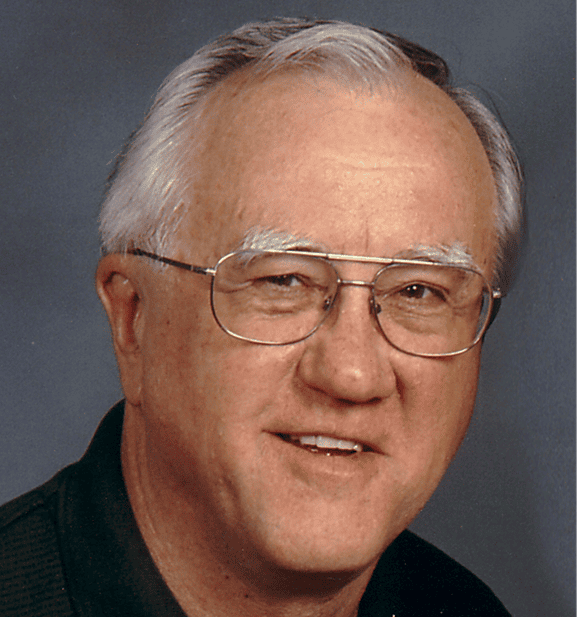
Larry and Vicki have been missionaries with Crossworld since 1972, and Larry has been primarily serving in educational and management ministries. He is the founder of IBEC Ventures, a business-as-mission coaching group, and he currently serves with IBEC as a coach, teacher, and writer. He is a graduate of Prairie Bible College, Seattle Pacific University (BA in business and economics), and the University of Calgary (PhD in sociology and administrative studies). He lives in Everett, Washington, and is the father of four adult children and ten grandchildren.
EMQ, Volume 62, Issue 2. Copyright © 2026 by Missio Nexus. All rights reserved. Not to be reproduced or copied in any form without written permission from Missio Nexus. Email: [email protected].